How to Care for and Sharpen a Japanese Knife: Rust, Washing and Whetstones
Takumi Path is reader-supported. Some links on this page are affiliate links: if you buy or book through them, we may earn a commission at no extra cost to you. Learn more.
Key points
- Carbon steel can start to rust within about 10 minutes if left wet or dirty, so wash and dry it straight after use, and especially after salty or acidic foods.
- Stainless steel is rust-resistant, not rust-proof: Kiya notes that even stainless knives can rust slightly.
- Only all-stainless or dishwasher-safe labelled knives can go in a dishwasher; carbon steel and wooden-handled knives cannot.
- Kai says a medium whetstone (#800–1000) is enough for routine sharpening, done about once or twice a month.
- If you would rather not sharpen yourself, shops and knife towns in Japan offer professional resharpening, such as Kiya in Tokyo and Sakai Denshokan in Sakai.
Contents
- First, know your steel
- Daily care: washing and drying
- How to remove rust from a carbon steel knife
- Cutting boards and how you cut
- Whetstones: grits and when to use each
- Soaking and flattening the stone
- How to sharpen: double-bevel vs single-bevel
- Professional resharpening in Japan
- Common mistakes to avoid
- Summary
A good Japanese kitchen knife can last for many years, but only if it is looked after. The care it needs depends mostly on one thing: whether the blade is stainless steel or carbon steel. This guide pulls together the advice of Japanese knife makers and shops, including Kai (貝印), Nihonbashi Kiya (日本橋木屋) in Tokyo and Aritsugu (有次), so you know what to do after every use, how to deal with rust, how to choose whetstones, and when to hand the job to a professional.
If you are still deciding which knife to buy, start with our comparison of gyuto, santoku and bunka knives or the full guide to the types of Japanese knives.
First, know your steel
Before anything else, check what your blade is made of. The product page, box or the shop should tell you.
| Stainless steel | Carbon steel (hagane, 鋼) | |
|---|---|---|
| What it is | Carbon steel with about 13–15% chromium added to resist rust (Kai) | Iron with about 0.6–1.2% carbon added (Kai) |
| Rust | Rust-resistant, but can still rust slightly (Kiya) | Rusts easily; Aritsugu says carbon steel will rust unless it has an anti-rust treatment |
| Care needed | Does not need frequent care (Kai) | Must be cared for after use, especially after cutting acidic foods such as fruit (Kai) |
| Sharpening | — | Cuts well and is easy to sharpen (Kai) |
| Dishwasher | Only if all-stainless or labelled dishwasher-safe (Kai) | Never (Kai) |
Many Japanese knives combine two metals: a hard steel edge joined to a softer body. Aritsugu calls this awase (合わせ), a construction that makes the edge less likely to chip. Kai groups clad knives together with carbon steel ones when it warns about fast rusting, so if your clad knife has a carbon steel edge, care for it as you would a carbon steel knife.
Daily care: washing and drying
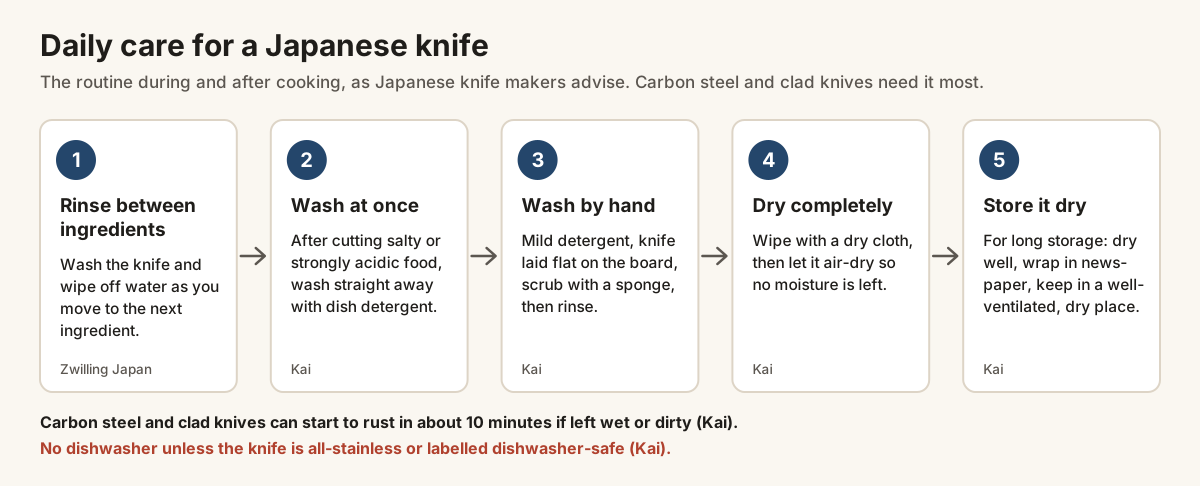
Kai warns that carbon steel and clad knives can start to rust in a short time, around 10 minutes, if they are left with moisture or food residue on them. That is why the routine below matters.
- Rinse between ingredients. Zwilling’s Japanese site suggests washing the knife and wiping off water as you move from one ingredient to the next while cooking.
- Wash at once after salty or acidic foods. Kai advises washing with dish detergent straight after cutting anything salty or strongly acidic.
- Wash by hand. Kai’s method is to put mild dish detergent on the knife, lay it flat against the cutting board and scrub it with a sponge, then rinse. Kai adds that pouring hot water over the blade sanitises it and helps the water evaporate.
- Dry completely. Wipe off the water with a dry cloth, then let the knife air-dry so that no moisture is left, as Kai advises.
- Store it dry. If you will not use the knife for a long time, Kai suggests drying it well, wrapping it in newspaper and keeping it somewhere well ventilated with little humidity.
How to remove rust from a carbon steel knife
Kiya describes rust on a carbon steel knife as something that cannot be completely prevented, and says it appears most often when the knife is new. Its method for removing it:
- Wet the knife.
- Sprinkle powdered cleanser on the rusty area.
- Rub it off with a damp wine cork.
- Rinse with water, then dry the blade thoroughly with a dry towel.
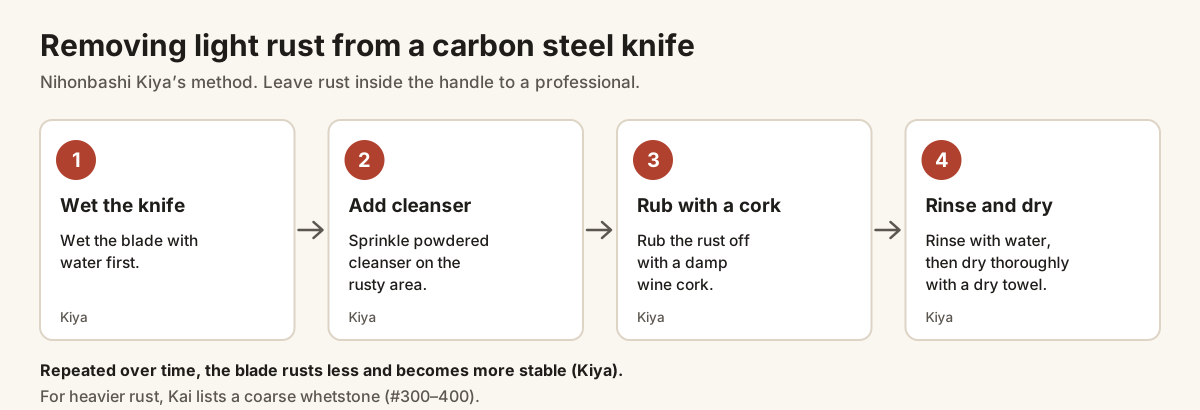
Kiya says that repeating this over time makes the blade rust less and become more stable. For heavier rust, Kai lists a coarse whetstone (#300–400) as the tool for removing rust and repairing chips (see below).
Cutting boards and how you cut
Kai describes wooden cutting boards as giving a natural feel when the blade meets the board. It describes glass and stainless steel boards as slippery and noisy to cut on.
How you use the knife matters too. Kai explains that chips are caused by forces that bend the edge, such as prying or twisting the blade. Move the knife straight forwards and backwards through the food rather than levering it sideways.
Whetstones: grits and when to use each
Kai sorts whetstones (toishi, 砥石) into three groups by grit number. A lower number means a coarser stone.
| Stone | Japanese | Grit (Kai) | Use |
|---|---|---|---|
| Coarse | ara-toishi (荒砥石) | #300–400 | Repairing chips, removing rust |
| Medium | naka-toishi (中砥石) | #800–1000 | Routine sharpening; Kai says this is enough for everyday resharpening |
| Finishing | shiage-toishi (仕上げ砥石) | #2000–3000 | Refining the edge after the medium stone |
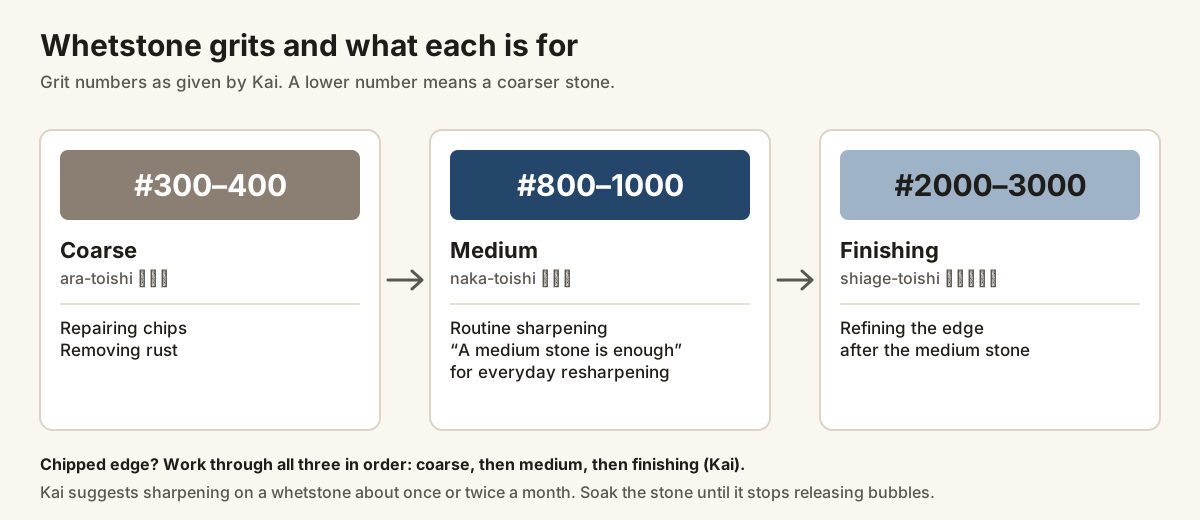
If the edge is chipped, Kai says to work through the stones in order: coarse, then medium, then finishing. As a general guide, Kai recommends sharpening on a whetstone about once or twice a month.
Soaking and flattening the stone
Kai says to let the whetstone soak up plenty of water before use: submerge it until it stops releasing bubbles. Kiya suggests setting the soaked stone on a damp cloth in the sink to keep it in place.
A stone wears unevenly over time, and Kai notes that you cannot sharpen well on an uneven surface. Kai describes three ways to flatten one: rub it on a flattening stone, rub two of the same stones against each other, or rub it on carborundum grit spread over waterproof sandpaper fixed to a flat surface. Whichever you use, soak the stone being flattened first. A flattening stone itself does not need to be soaked until the bubbles stop.
How to sharpen: double-bevel vs single-bevel
Japanese knives come in two edge types, and they are sharpened differently.
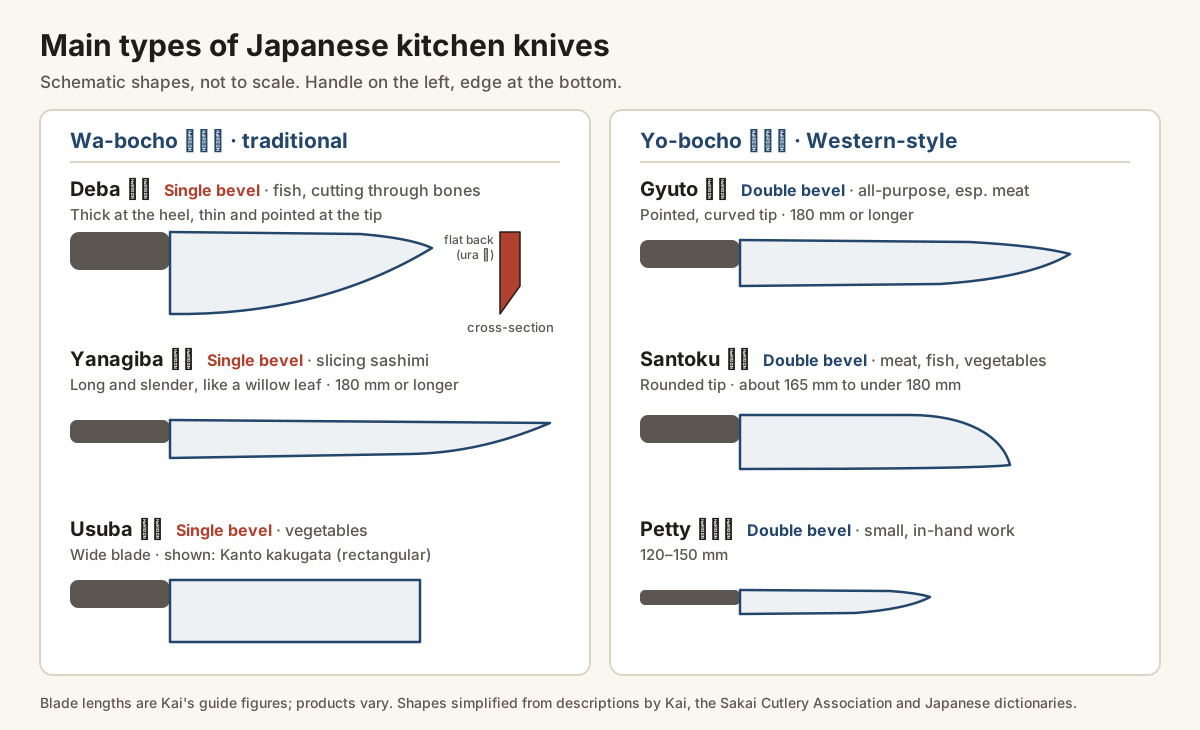
- Double-bevel (両刃) knives, such as the gyuto and santoku, are sharpened at roughly the same angle on both sides, according to Aritsugu.
- Single-bevel (片刃) knives, such as the deba (出刃) and yanagiba (柳刃), are flat on one side and convex on the other (Aritsugu). Aritsugu lists the traditional Japanese sashimi, deba and usuba (薄刃) knives as single-bevel, while the nakiri (菜切) vegetable knife is double-bevel.
Kiya gives these guidelines for positioning the knife on the stone:
- Double-bevel knife: place the blade on the stone turned at about 50 degrees, and raise the spine to about the height of three 10-yen coins stacked under it. Sharpen at that angle.
- Single-bevel knife: place the blade on the stone turned at about 45 degrees and sharpen the bevelled front side.
- The back of a single-bevel knife: lay it completely flat against the stone when you sharpen it, as Kiya puts it.
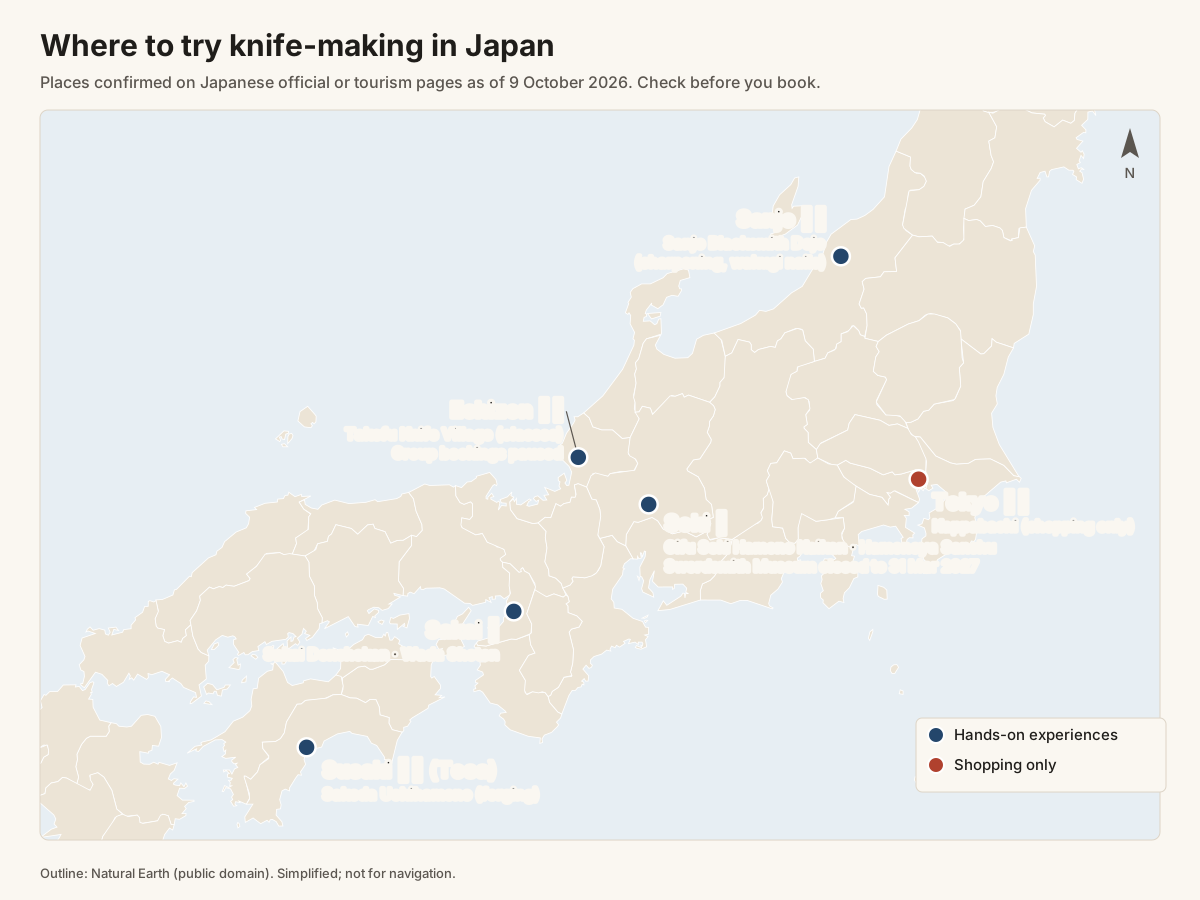
If you would like to learn in person, some knife towns offer sharpening experiences. Sanjo Kaji Dojo (三条鍛冶道場) in Niigata, for example, lists knife sharpening among its hands-on experiences. See our guide to knife-making experiences in Japan for more options.
Professional resharpening in Japan
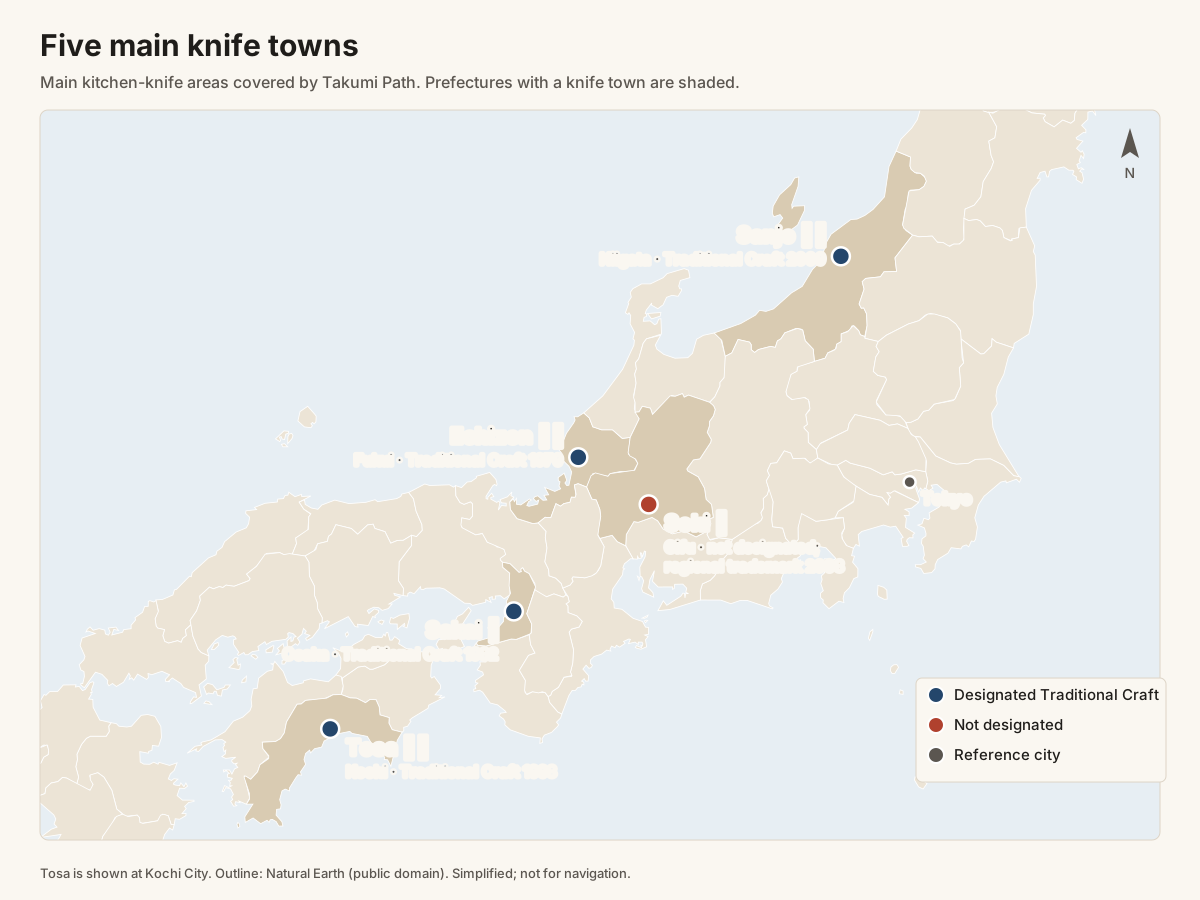
Sharpening is a specialist skill in Japan. In Sakai (堺), one of the country’s main knife-making areas, the city explains that forging, edge sharpening (hatsuke, 刃付け) and handle fitting are each done by separate specialist craftspeople. Many shops and knife towns also offer resharpening for customers.
| Where | What is offered | Notes |
|---|---|---|
| Nihonbashi Kiya (Tokyo) | Resharpening of knives sold by Kiya only | Japanese-style knives ¥2,200–5,500, Western-style ¥1,650–6,050 (tax included); about 3 weeks. Large chips may cost 50% or more extra |
| Sakai Denshokan (堺伝匠館), Sakai (Osaka) | Resharpening of knives and scissors | From ¥1,600 per knife, shipping extra. Drop-offs are taken daily; the sharpening itself is done at weekends and can take about a week |
| Gifu Seki Hamono Kaikan (岐阜関刃物会館) (Seki, Gifu) | Resharpening by craftspeople | Price not listed on the Gifu tourism site |
Prices are as listed on each official page when checked on 11 October 2026 and may change. Kiya’s service covers its own products, so check with the shop that sold you your knife first.
Sending a knife by post. Kiya accepts knives sent in for sharpening if you contact the shop before sending and pay the shipping. For postal requests, Sakai Denshokan’s page asks you to contact the office of the cutlery federation that publishes it. Neither page says whether knives sent from outside Japan are accepted, so ask before you ship.
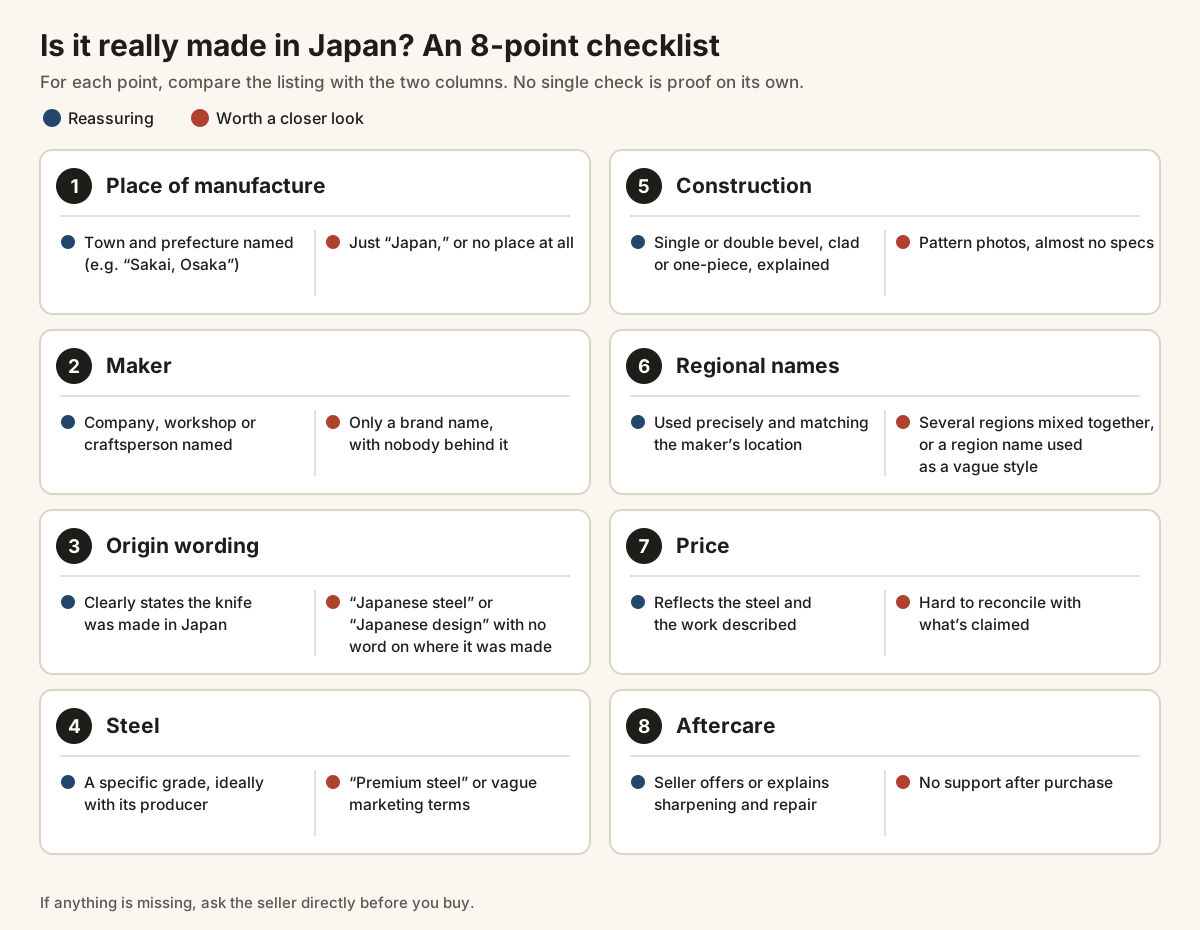
If you bought your knife in Japan, ask the shop about resharpening before you leave. A shop that resharpens the knives it sells is one more reason to buy from a named maker or retailer.
Common mistakes to avoid
- Leaving a carbon steel knife wet on the board. Rust can start in about 10 minutes (Kai).
- Assuming stainless can’t rust. It can, slightly (Kiya).
- Using the dishwasher for carbon steel or wooden-handled knives (Kai).
- Relying only on a pull-through sharpener or honing rod. Neither replaces a whetstone (Kai).
- Prying or twisting the blade through hard food, which causes chips (Kai).
- Sharpening a single-bevel knife like a double-bevel one. The flat back goes flat on the stone (Kiya).
Summary
- Check your steel first: carbon steel needs care after every use, and stainless is rust-resistant but not rust-proof.
- Wash by hand, wash at once after salty or acidic foods, and dry completely. Carbon steel can begin to rust within about 10 minutes (Kai).
- Never use a dishwasher unless the knife is all-stainless or labelled dishwasher-safe.
- Remove light rust with powdered cleanser and a damp cork (Kiya). Leave handle corrosion to a professional.
- A medium whetstone (#800–1000) covers routine sharpening once or twice a month. Use a coarse stone for chips and rust and a finishing stone to refine (Kai).
- Sharpen single-bevel knives with the back flat on the stone.
- For professional help, Kiya, Sakai Denshokan and Gifu Seki Hamono Kaikan all offer resharpening.
Sources
- https://www.kiya-hamono.co.jp/mainte/sabitori.html
- https://www.kiya-hamono.co.jp/mainte/togi.html
- https://www.kiya-hamono.co.jp/mainte/sharpening_repair.html
- https://www.kai-group.com/support/faq/cooking/knife/
- https://www.kai-group.com/products/special/hocho/maintenance/howto/
- https://www.kai-group.com/products/special/hocho/use/manaita/
- https://www.kai-group.com/media/kitchen/167/
- https://aritsugu.jp/包丁の説明/
- https://www.zwilling.com/jp/magazine/product-guide-knives/find-the-right-knife.html
- https://www.sakaihamono.or.jp/museum07.html
- https://www.city.sakai.lg.jp/kanko/sakai/keisho/dentosangyo/sakaiuchihamono.html
- https://www.kankou-gifu.jp/spot/detail_7187.html
- https://niigata-kankou.or.jp/spot/detail_5735.html