Buying Guides
How to choose and where to buy authentic, Japanese-made craft goods.
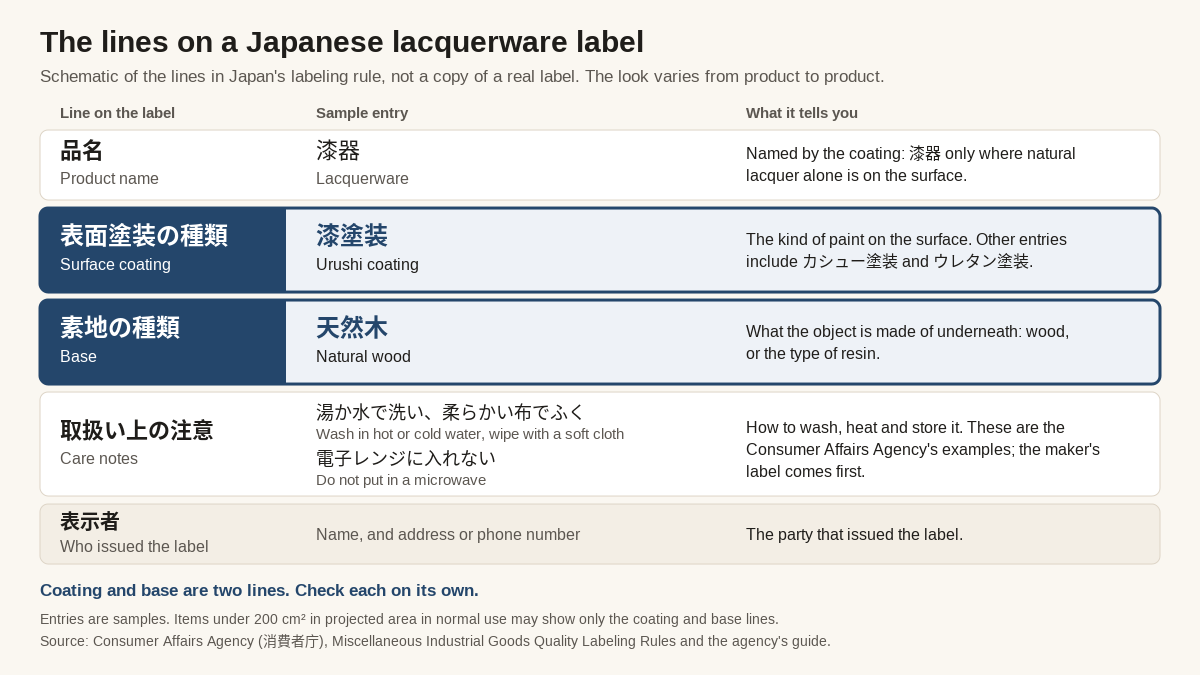
How to Read a Japanese Lacquerware Label: Coating and Base
An English product page says 'lacquer bowl'. Is it urushi, and can it go in the dishwasher? Learn the two label lines Japan uses, coating and base.
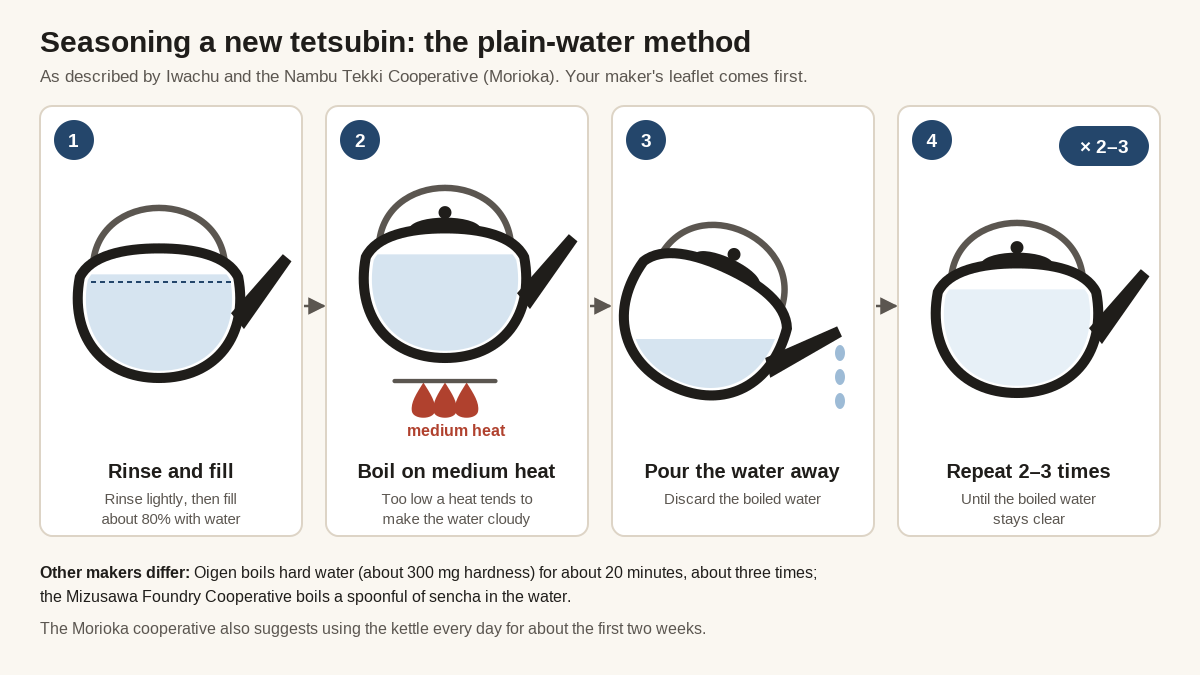
Tetsubin Care: Seasoning, Drying, Rust and Cloudy Water
Iwate makers say not to scrub off the white scale and red spots in a tetsubin. How to season a new kettle, dry it, handle rust and cloudy water, and use it on gas or IH.
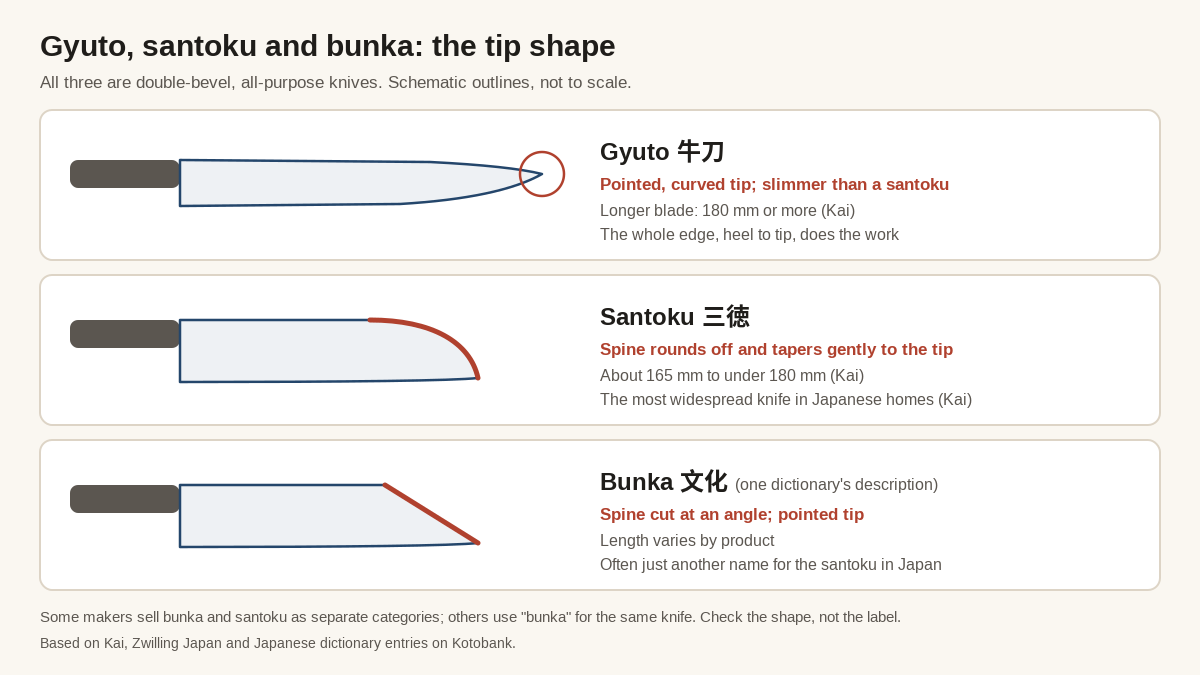
Gyuto vs Santoku vs Bunka: Choosing Your First Japanese Knife
Kai and Zwilling Japan both point beginners to a santoku. Compare gyuto, santoku and bunka by length and tip, see where sources differ on bunka, and pick a steel.
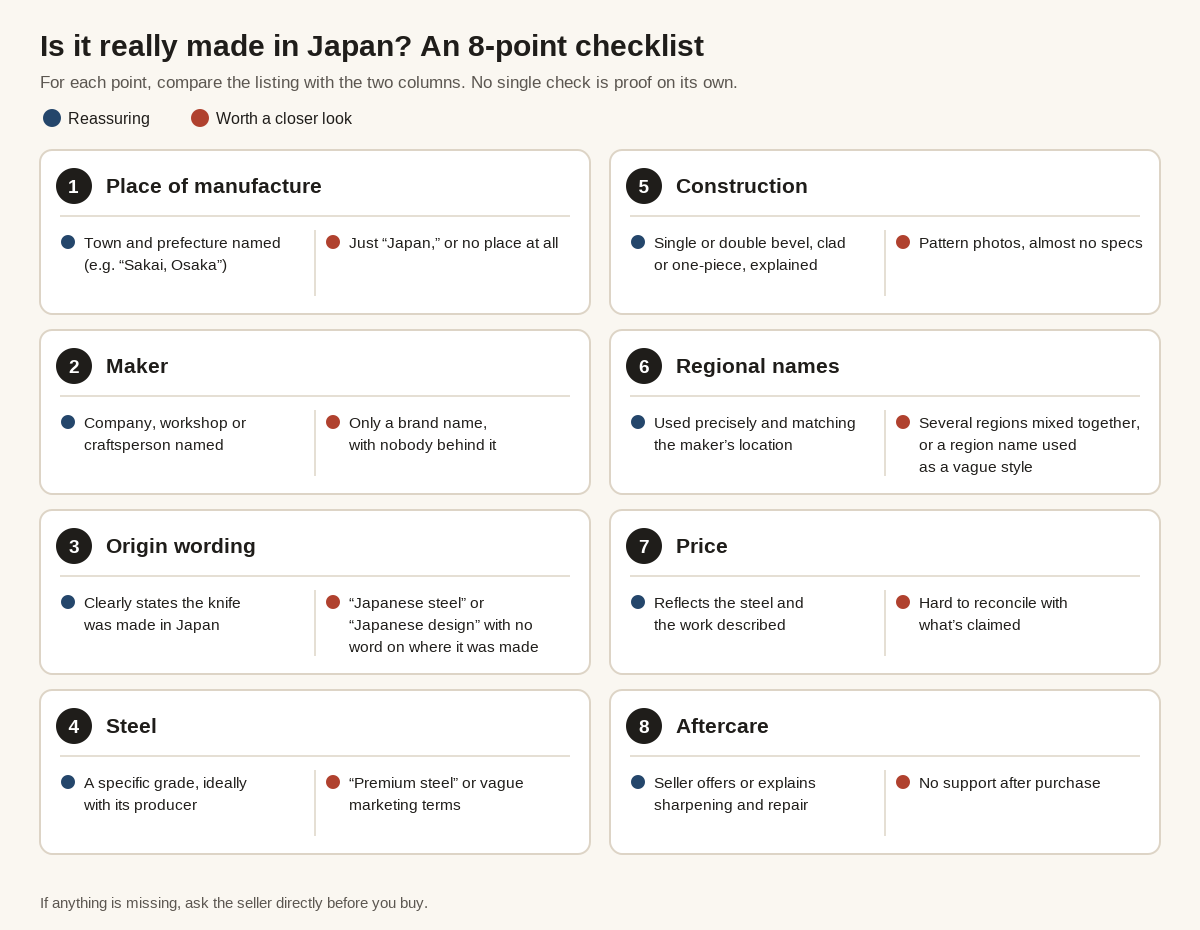
Is That Japanese Knife Really Made in Japan? 8 Checks
Made in Japan or just Japanese-style? An eight-point checklist for knife listings, plus what place names, steel names and Damascus patterns do and don't prove.
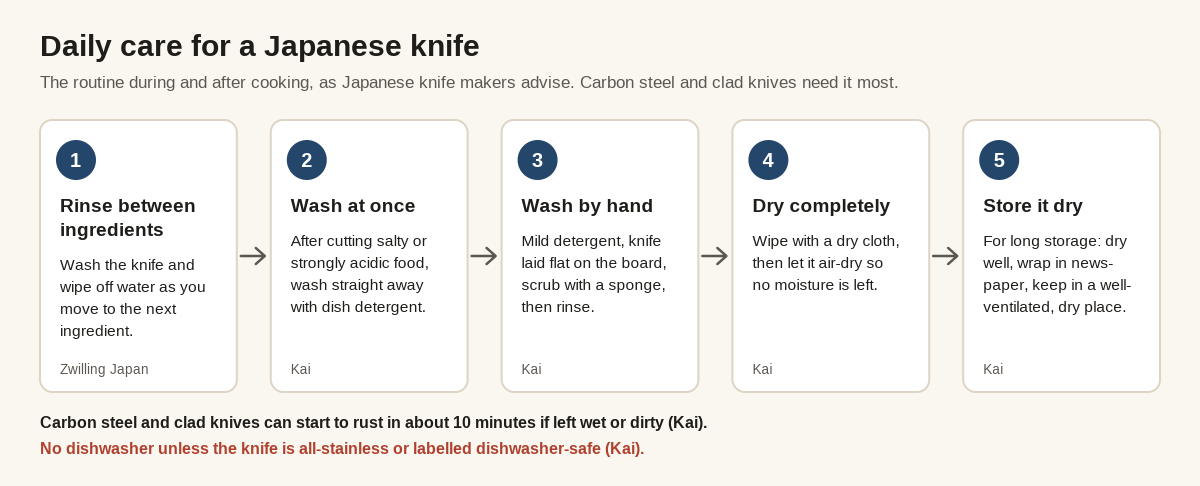
How to Care for and Sharpen a Japanese Knife: Rust, Washing and Whetstones
Japanese knife care from Japanese makers: preventing rust, washing and drying, why dishwashers are out, whether you need a whetstone, and how resharpening works.
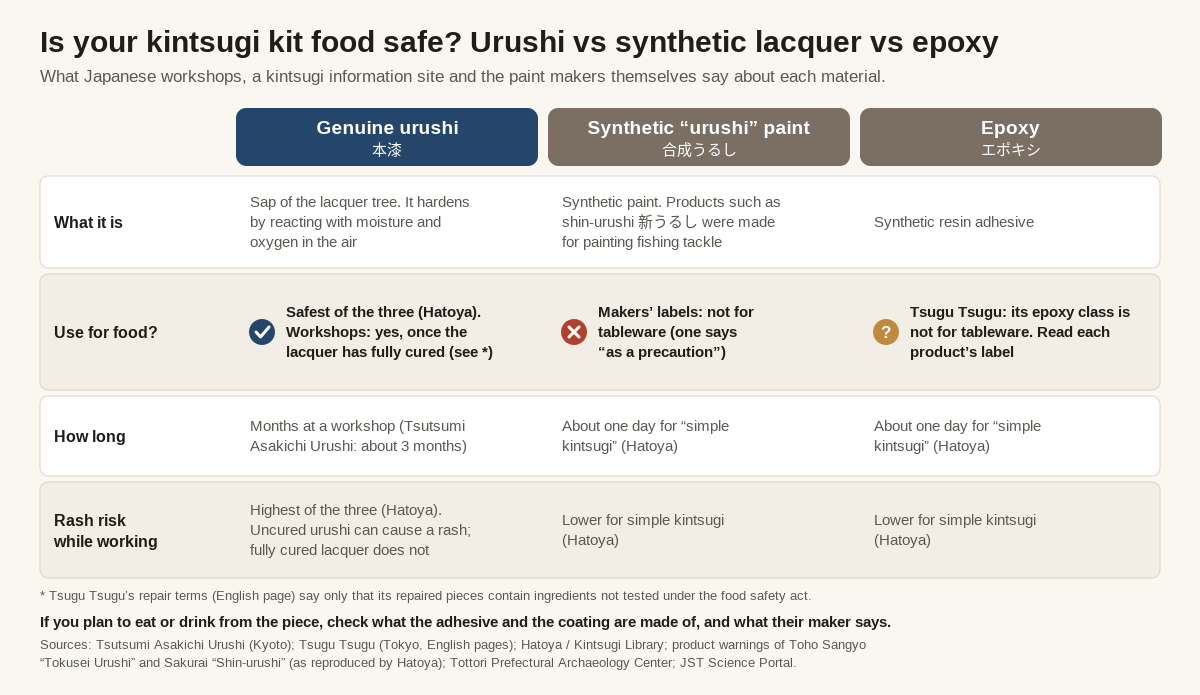
Real Urushi vs Epoxy Kintsugi: Is Your Kintsugi Kit Food Safe?
Real urushi, synthetic lacquer or epoxy? See what Japanese makers say about food use, how to read a kintsugi kit's label, and how to care for a repaired bowl.
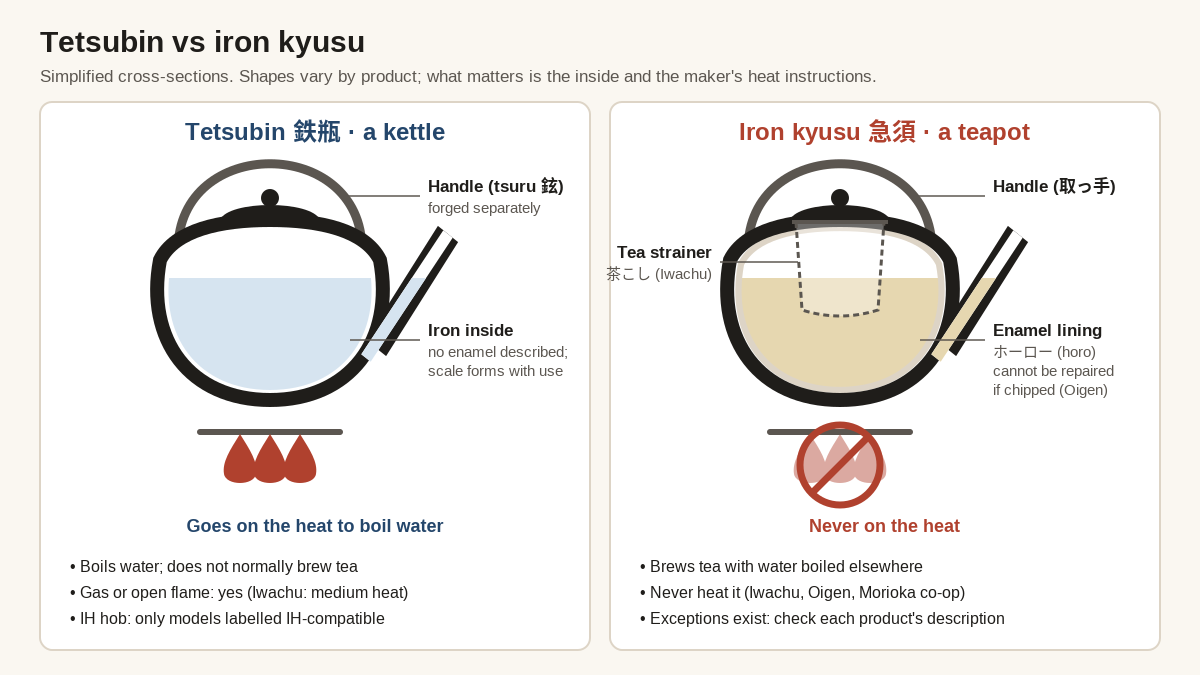
Tetsubin vs Cast Iron Teapot (Kyusu): Can You Boil Water in It?
A tetsubin is a kettle; an iron kyusu is an enamel-lined teapot. Japanese makers say never heat a kyusu. Compare the two, check the exceptions and learn what to ask.