How to Season and Care for a Tetsubin: Japanese Makers' Guide
Takumi Path is reader-supported. Some links on this page are affiliate links: if you buy or book through them, we may earn a commission at no extra cost to you. Learn more.
Key points
- Makers season a new tetsubin in different ways (plain water, hard water or sencha), so follow the leaflet that came with your own kettle.
- After every use, empty the kettle completely and let the remaining heat dry the inside with the lid off.
- Never scrub the inside or use detergent: makers say the white scale and red spots that form are normal and should be left alone.
- If rust makes the water cloudy or smelly, makers treat the kettle with tea, though their methods differ in time and number of repeats.
- Avoid boiling the kettle dry and cooling it suddenly, use medium heat, and use an induction hob only with models the maker lists as IH-compatible.
Contents
- Why a tetsubin needs different care
- Seasoning a new tetsubin before first use
- Iwachu and the Morioka cooperative: plain water
- Oigen: hard water
- Mizusawa cooperative: sencha
- Daily use: heat, drying and the outside
- Use medium heat
- Dry it after every use
- Caring for the outside
- White scale (yuaka): what it is and why you leave it
- When rust appears or the water turns cloudy
- Iwachu: simmer sencha
- Oigen: used tea leaves in a bag
- Morioka cooperative: repeat the first-use routine
- Gas, stoves and IH hobs
- Gas and other open heat
- Induction (IH) hobs
- What not to do
- A note on iron in the water
- Summary
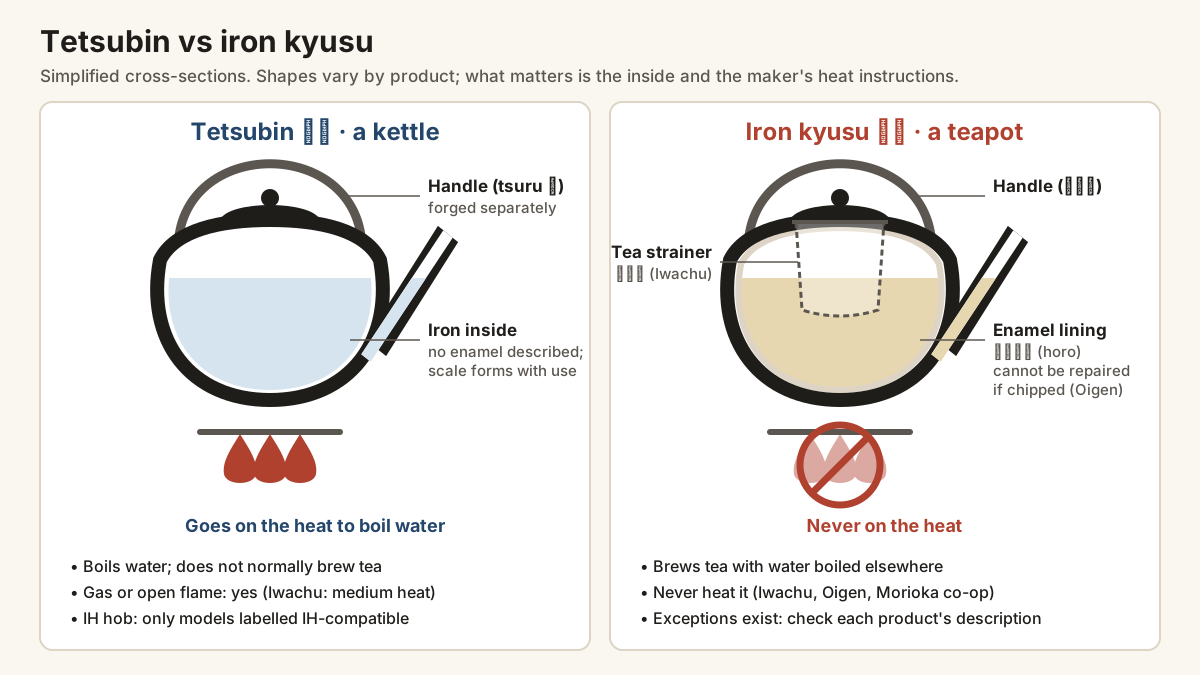
A cast iron tetsubin (鉄瓶) is a kettle for boiling water. Unlike most kettles you may own, it has a bare iron interior that slowly changes as you use it, and the way you treat it in the first weeks matters.
This guide gathers the care instructions published by makers and producers’ associations of Nambu tekki (南部鉄器), the cast ironware of Iwate Prefecture (岩手県) in northern Japan. Our main sources are the makers Iwachu (岩鋳) in Morioka (盛岡) and Oigen (及源) in Mizusawa (水沢), Oshu (奥州市), along with the Nambu Tekki Cooperative (南部鉄器協同組合) in Morioka and the Mizusawa Foundry Cooperative (水沢鋳物工業協同組合). Where they disagree, we say so and name each source. We have not tested these methods ourselves; this is a summary of what the makers say.
Why a tetsubin needs different care
Two things set a tetsubin apart from a stainless steel or enamel kettle.
First, the inside is bare iron. Makers’ care guides assume that white scale, red spots and even some rust will form inside, and they tell you to leave most of it alone.
Second, the iron has already been treated at the foundry. In the traditional process, the finished kettle is baked in a charcoal fire to stop it rusting, a step called kanakedome (金気止め). Japan’s Association for the Promotion of Traditional Craft Industries (伝統的工芸品産業振興協会) describes it as forming a magnetic oxide film on the surface. Iwachu warns that scrubbing the inside removes this film and makes rust worse, so much of daily care comes down to leaving it alone.
Seasoning a new tetsubin before first use
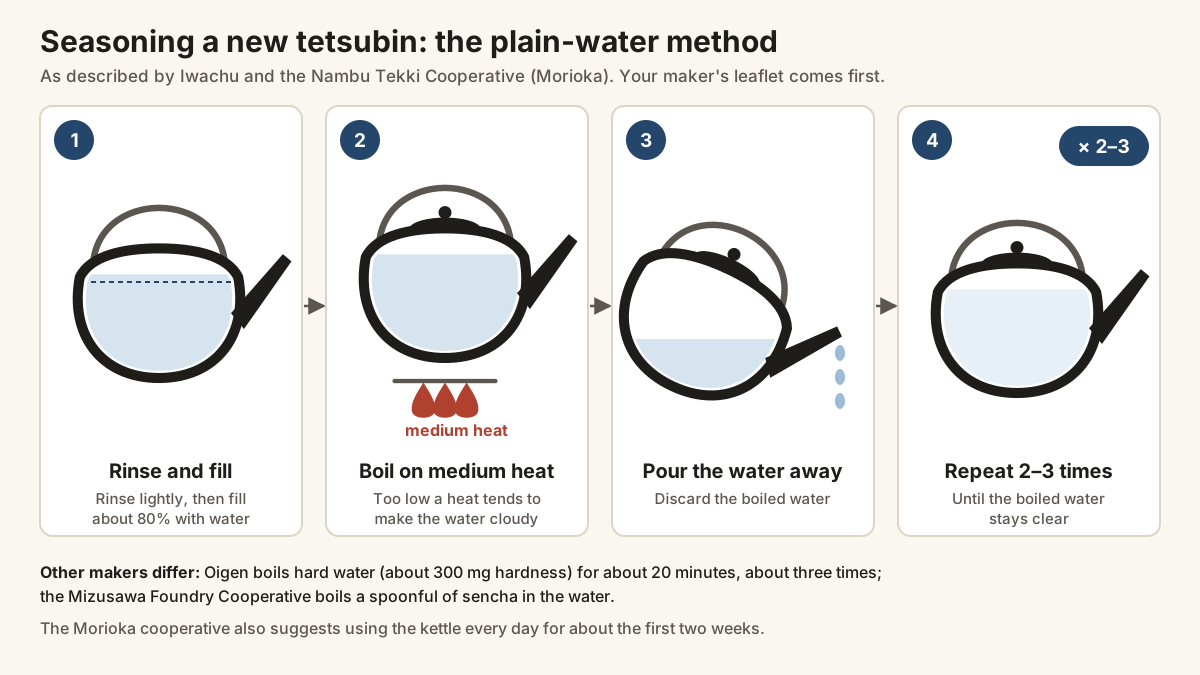
Makers do not all recommend the same first-use method. Check the leaflet that came with your kettle first. Here is how the main sources describe it.
Iwachu and the Morioka cooperative: plain water
- Rinse the kettle lightly, then fill it about 80 percent full with water.
- Bring it to the boil over medium heat. Iwachu notes that if the heat is too low, the water tends to come out cloudy.
- Pour the water away.
- Repeat two or three times, until the boiled water stays clear.
The Nambu Tekki Cooperative says the water is fine to drink once it no longer comes out cloudy, and that you should use the kettle every day for about the first two weeks so that white scale forms inside.
Oigen: hard water
Oigen builds up scale from the start by boiling hard water, whose minerals crystallise on the inside and help keep rust away.
- Rinse the inside lightly with water.
- Fill the kettle about 80 percent full with hard water of around 300 mg hardness. Oigen gives bottled waters such as Evian and Vittel as examples.
- Boil it for about 20 minutes, pour it away and let the remaining heat dry the kettle.
- Repeat about three times. Oigen says the water is drinkable from the second boil onwards.
Mizusawa cooperative: sencha
The Mizusawa Foundry Cooperative puts a spoonful of sencha (煎茶, Japanese green tea) in the kettle with water to about 70 percent full, and boils it as if making tea. It explains that this forms a film of tannin iron (タンニン鉄) on the inside. The cooperative does not give a boiling time or number of repeats.
| Source | Water | Method |
|---|---|---|
| Iwachu | Plain water | Boil over medium heat and discard, two or three times, until clear |
| Nambu Tekki Cooperative (Morioka) | Plain water | Boil two or three times until no longer cloudy; use daily for about two weeks |
| Oigen | Hard water (about 300 mg hardness) | Boil about 20 minutes and discard, about three times |
| Mizusawa Foundry Cooperative | Water with a spoonful of sencha | Boil once like tea; no time or repeats given |
Daily use: heat, drying and the outside
Use medium heat
Iwachu describes medium heat as the basic setting. It warns that strong heat can damage the kettle, and that heat that is too low can make the water cloudy.
Dry it after every use
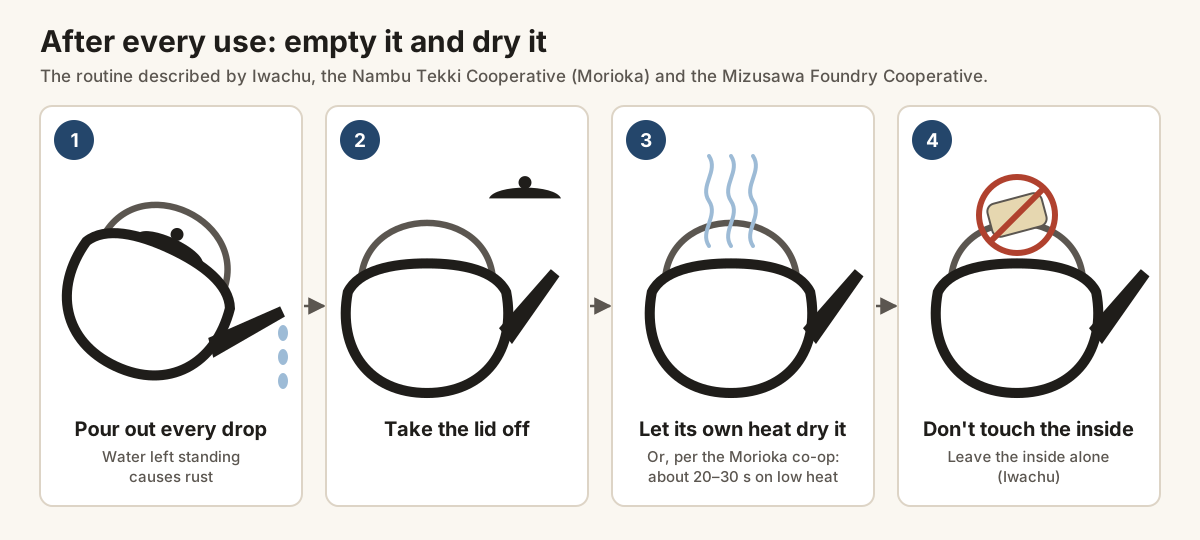
The most important habit is drying. Iwachu, the Morioka cooperative and the Mizusawa cooperative all describe the same basic routine:
- Pour out every drop. Iwachu and the Mizusawa cooperative both say water left standing in the kettle causes rust.
- Take the lid off.
- Dry the inside with heat. Iwachu suggests using the kettle’s remaining heat or briefly heating it empty; the Morioka cooperative suggests the remaining heat or about 20 to 30 seconds on low heat.
- Do not touch the inside (Iwachu).
Store the kettle somewhere dry. For long-term storage, Oigen suggests drying it completely, wrapping the body and lid separately in newspaper, and replacing the paper if it gets damp. If a tetsubin has not been used for a long time, the Morioka cooperative says it can take around a week of use to bring it back to good condition.
Caring for the outside
In the traditional process, the outside is polished and then coloured with lacquer, so it is cared for differently from the bare iron inside.
- Nambu Tekki Cooperative: wipe the outside with a dry cloth, and do not use polishing powder.
- Oigen: if the outside or the lid rusts, wipe it with a cloth and work in a little edible camellia oil (食用椿油).
- Mizusawa Foundry Cooperative: rub rust on the outside with a dry cloth holding damp tea leaves.
White scale (yuaka): what it is and why you leave it
After a while, a white film or crust forms on the inside. This is yuaka (湯垢), or kettle scale.
- Iwachu: red spots appear first, then a white film of scale. Never scrub them off. Once scale forms, it keeps the water clear and makes it taste better.
- Oigen: white crystals inside are mineral scale that helps prevent rust, so leave them. White bits floating in the water are flakes of scale or minerals starting to crystallise; they are harmless, and you can rinse the kettle if they bother you.
- Nambu Tekki Cooperative: red spots that appear around the fifth day of use should not be mistaken for rust and wiped away.
So the white layer, and the reddish spots that come with it early on, are part of a working tetsubin, not a sign of damage.
When rust appears or the water turns cloudy
Rust inside a tetsubin is not automatically a problem. Iwachu says rust is not harmful, and that if the boiled water does not come out cloudy, you can keep using the kettle as it is. Oigen likewise says you can carry on if the water is clear and tastes the same.
If the water does turn cloudy or smells, the makers turn to tea, because the tannin in tea reacts with the iron. Their methods differ, so use the one from your own maker.
Iwachu: simmer sencha
- Fill the kettle about 80 percent full with water and add about a teaspoon of sencha.
- Simmer it for about 30 minutes over medium heat or lower, with the lid set ajar to let steam out. Watch that it does not boil over or boil dry.
- Pour it away. Iwachu’s FAQ says to repeat this three or four times.
The water may pick up some colour from the tea, but once the rusty cloudiness and metallic taste are gone, the kettle is ready to use. Iwachu describes this as a form of kanakedome.
Oigen: used tea leaves in a bag
- Fill the kettle about 80 percent full with water. Put used sencha leaves (茶ガラ) in a stock bag (だしパック), add them, and bring to the boil with the lid off.
- Once it boils, simmer on low heat for about 20 minutes.
- Turn off the heat, top up with water without letting it overflow, and leave it with the leaves in for about half a day. Then pour it all away.
- The job is done when the red rust has turned black. If it is still red, repeat two or three times.
- Finally, boil plain water two or three times to wash out the tea until the water is clear.
Oigen otherwise does not recommend brewing tea in a tetsubin, because the tannin reacts with the iron and can turn the tea black. It uses tea leaves only for treating rust.
Morioka cooperative: repeat the first-use routine
If the kettle has rusted because water was left in it, the Nambu Tekki Cooperative says to repeat the first-use routine (boil and discard) two or three times.
Gas, stoves and IH hobs
Gas and other open heat
Medium heat is the standard (Iwachu). Oigen says its tetsubin can also be used on kerosene and wood-burning stoves, but warns about burns and boiling over, and notes that leaving lukewarm water in the kettle for a long time makes rust more likely.
Induction (IH) hobs
Do not assume every Nambu tetsubin works on induction.
- Iwachu: only products carrying an IH label can be used. Among its tetsubin, it names the No. 7 Arare and No. 18 Hiramaru Arare types. Iwachu also notes that iron products with a small base may heat slowly on IH.
- Oigen: some of its tetsubin are IH-compatible, and each product page lists the heat sources it suits. On IH, Oigen asks you to stay at medium output or lower, so that sudden heating does not warp the base.
What not to do
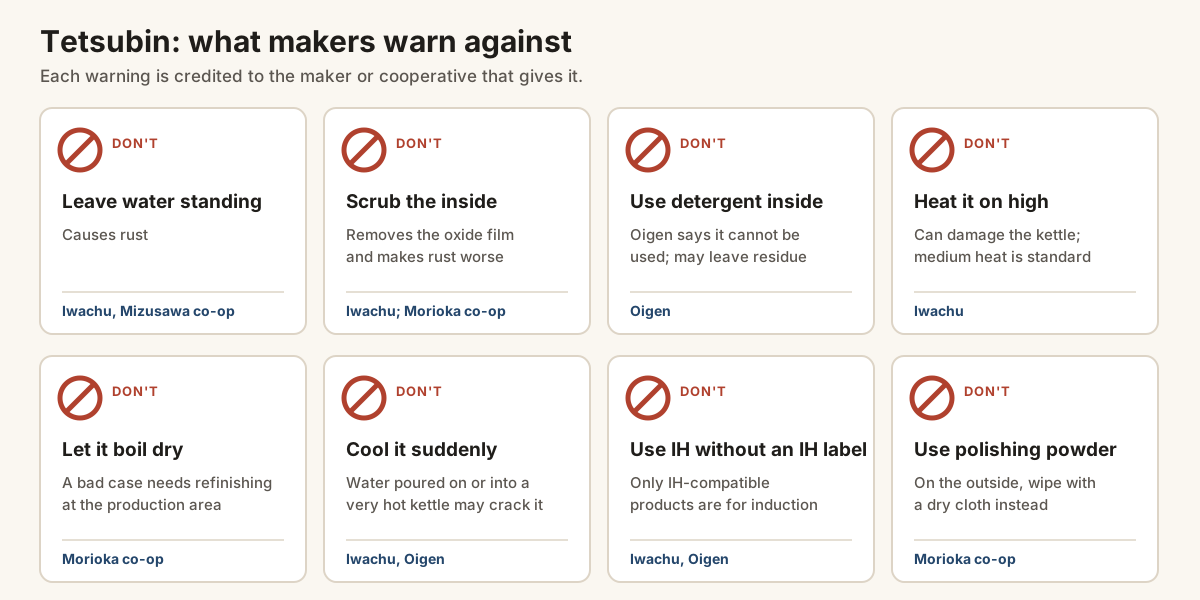
A quick checklist of the things makers warn against:
| Don’t | Why (according to the source) |
|---|---|
| Leave water standing in the kettle | Causes rust (Iwachu, Mizusawa cooperative) |
| Scrub the inside with a brush or cloth | Removes the oxide film and makes rust worse (Iwachu); the Morioka cooperative also says not to |
| Use detergent inside | Oigen says detergent cannot be used and may leave residue |
| Heat it on high | Can damage the kettle (Iwachu) |
| Let it boil dry | A bad case needs refinishing at the production area (Morioka cooperative) |
| Pour water on or into a very hot kettle | May crack (Iwachu, Oigen) |
| Use it on IH without an IH label | Only IH-compatible products are for induction (Iwachu, Oigen) |
| Use polishing powder on the outside | The Morioka cooperative advises against it |
A note on iron in the water
You may read that a tetsubin is a good source of iron or is good for your health. We do not make those claims, and we have not found Japanese public or medical sources that support them. Oigen states only that water boiled in a tetsubin contains “a trace of iron”, and that the amount varies with how and where the kettle is used, so it gives no figures. On taste, Iwachu says scale makes the water taste better, and the Mizusawa cooperative describes the water as mellow (まろやか). Those are the makers’ own descriptions, not something we have measured.
Summary
- Seasoning: Iwachu and the Morioka cooperative boil plain water two or three times until clear, Oigen boils hard water, and the Mizusawa cooperative boils sencha. Follow your own maker’s leaflet.
- Every use: medium heat, then empty the kettle and dry it with the lid off using its own heat. Don’t touch the inside.
- Scale and red spots: normal. Leave them; no scrubbing, no detergent.
- Rust: if the water is clear, keep using it. If it is cloudy or smells, treat it with tea using your maker’s method.
- Never boil it dry, cool it suddenly, or use it on IH unless the maker lists it as IH-compatible.
- For enamel-lined iron teapots, see Tetsubin vs Cast Iron Teapot (Kyusu).
- To learn where Nambu ironware comes from and how it is made, see our Nambu tekki guide.
Sources
- https://iwachu.co.jp/pages/care-tetsubin
- https://iwachu.co.jp/pages/faq
- https://oigen.jp/pages/q-a
- https://www.ginga.or.jp/nanbu/use.html
- https://www.ginga.or.jp/nanbu/making.html
- https://oshu-nambutekki.com/category/howtouse/
- https://oshu-nambutekki.com/howtouse-3/
- https://oshu-nambutekki.com/howtouse-4/
- https://oshu-nambutekki.com/
- https://kougeihin.jp/craft/0701/