Tetsubin vs Cast Iron Teapot (Kyusu): Can You Boil Water in It?
Takumi Path is reader-supported. Some links on this page are affiliate links: if you buy or book through them, we may earn a commission at no extra cost to you. Learn more.
Key points
- A tetsubin is a cast iron kettle for boiling water, while an iron kyusu is a teapot for brewing tea with water you have already boiled.
- Japanese makers line the inside of iron kyusu with enamel and say they must not be put on a stove or open flame.
- Some products, such as Iwachu's kettle-teapot hybrids, can go on the heat, so always check the maker's description for each item.
- According to the maker Oigen, water boiled in a tetsubin contains a trace of iron, while no iron dissolves from an enamel-lined kyusu.
- The two need very different care: never scrub the inside of a tetsubin, and never heat a kyusu or leave tea standing in it.
Contents
Japanese cast iron comes in two kinds of pot that can look very alike: the tetsubin (鉄瓶) and the iron kyusu (急須). Both are heavy cast iron with a spout and a lid.
Japanese makers, though, treat these as two different tools with two different jobs. Iwachu (岩鋳), a maker founded in 1902, for example, sells them as separate products and publishes separate care instructions for each. One is a kettle you put on the stove. The other is a teapot you must never put on the stove. Mixing them up can ruin a pot that cost you real money. This guide explains the difference, the exceptions, and how to look after each one, based on care instructions published by makers and producers’ associations in Iwate.
The short answer
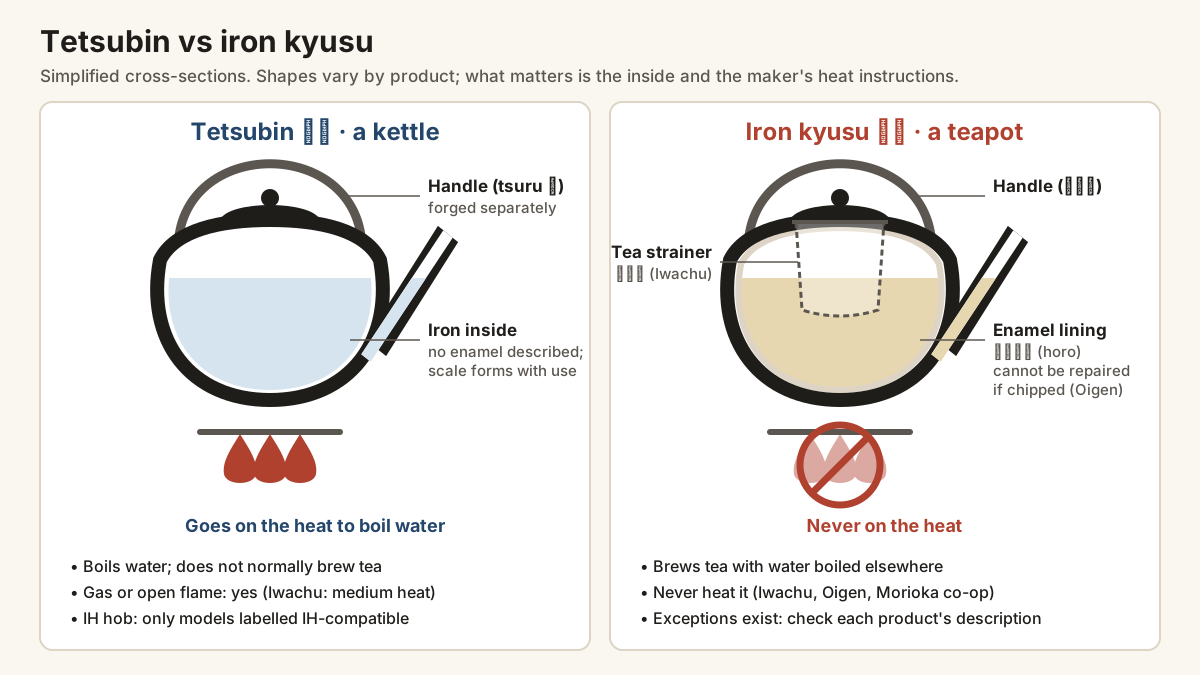
- A tetsubin is a kettle. You fill it with water and boil the water on the heat. You do not normally brew tea in it.
- An iron kyusu is a teapot. You put tea leaves in it and pour in water you have already boiled. The inside is coated with enamel (ホーロー, horo), and makers say it cannot be used to boil water.
So, can you boil water in a cast iron teapot? If it is an enamel-lined kyusu, no. Iwachu says plainly that you cannot boil water in its kyusu and that direct flame is not allowed.
A quick introduction to Nambu ironware
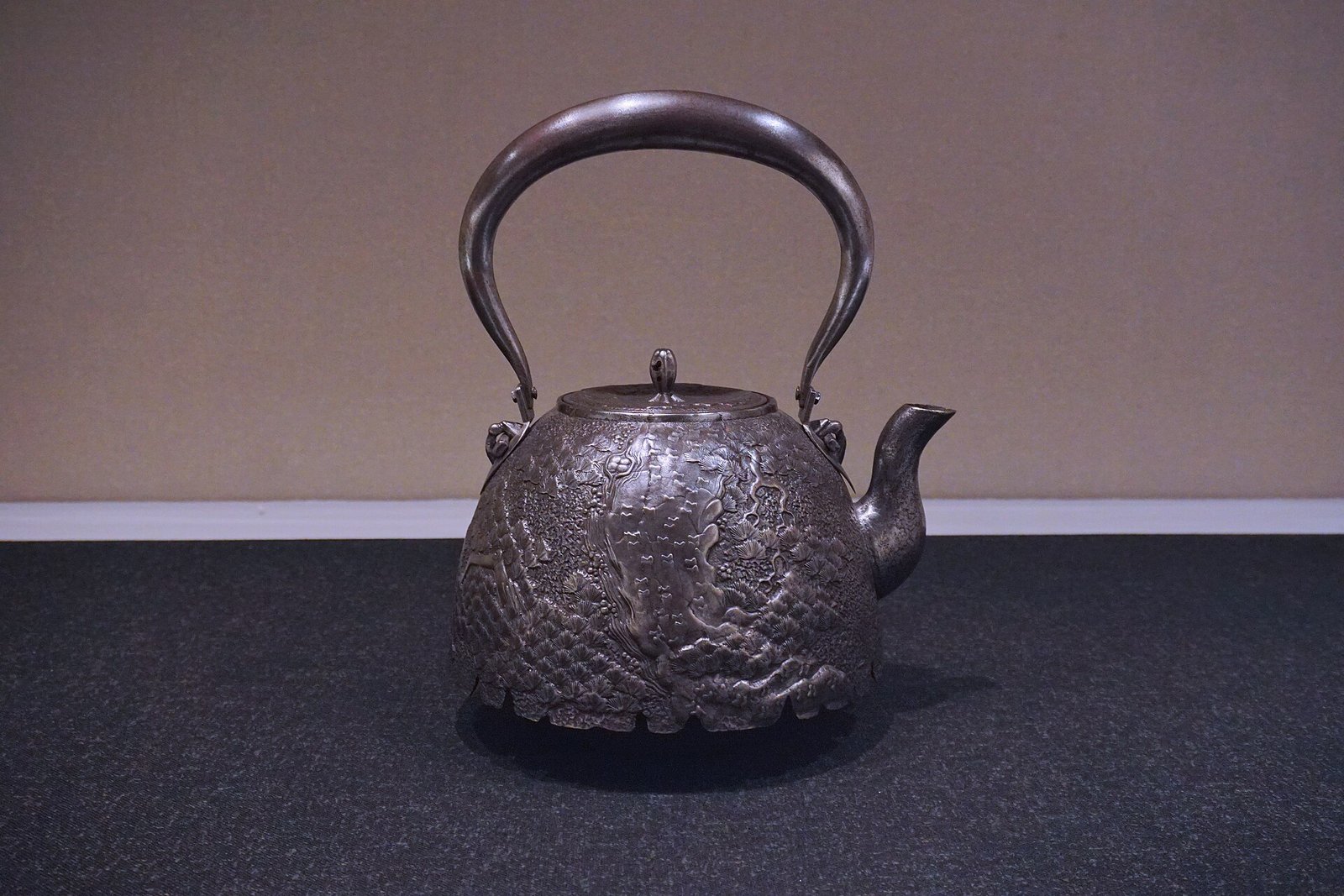
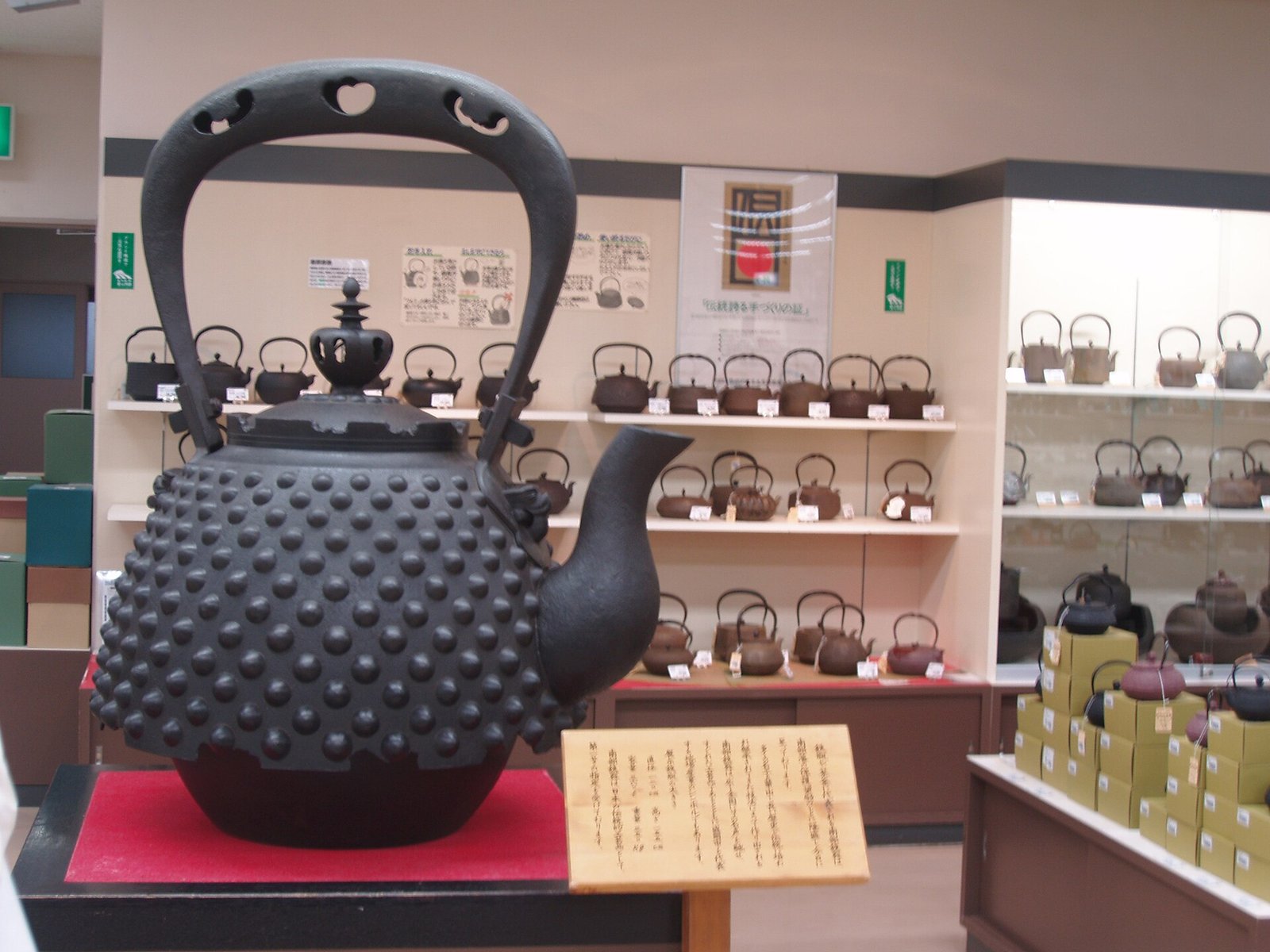
This guide draws on makers of Nambu tekki (南部鉄器), the cast ironware of Iwate Prefecture (岩手県) in northern Japan. In 1975 it was among the first group of crafts designated as a Traditional Craft of Japan (伝統的工芸品) by the national government.
It comes from two production centres with separate histories: Morioka (盛岡) and Mizusawa (水沢) in the city of Oshu (奥州市). Morioka’s ironwork grew out of kettles made for the tea ceremony. Mizusawa was known for everyday pots and pans. After the two areas exchanged techniques, during the decade from 1955 to 1964 the ironware of both was called by one name, Nambu tekki. Our Nambu tekki guide covers the full history.
The tetsubin itself was born in the 18th century, when makers created a smaller, more practical version of the tea-ceremony kettle, the chanoyu-gama (茶の湯釜), and it came into easy everyday use among ordinary people.
Tetsubin vs kyusu at a glance
| Tetsubin (鉄瓶) | Iron kyusu (急須) | |
|---|---|---|
| What it is for | Boiling water | Brewing tea with water boiled elsewhere |
| Inside | Not described as enamelled; makers’ care guides expect scale, red spots and rust to form on the inside | Enamel-coated (Iwachu: “The inside of the teapot is enamel-treated.”) |
| Stove or open flame | Yes; Iwachu recommends medium heat | No (Iwachu, Oigen and the Morioka cooperative all say so) |
| Induction (IH) hob | Only models labelled as IH-compatible | No, unless the product is specifically a heatable type (see exceptions) |
| Do you brew tea in it? | Not normally; it is made for heating water | Yes; that is its job |
| Iron in the water | Oigen: water boiled in a tetsubin contains “a trace of iron” | Oigen: no iron dissolves, because of the enamel |
| Daily care | Empty it, dry it with the remaining heat, never scrub the inside, no detergent | Never heat it, don’t leave tea in it, wash with a soft sponge |
One useful detail: on a tetsubin the body is cast, but the handle, called the tsuru (鉉), is forged by hammering hot iron, so it is made by a different craftsman.
Why you must not heat an enamel-lined kyusu
The enamel coating is what makes a kyusu practical as a teapot. It keeps tea off the bare iron, and Oigen (及源), a maker in Mizusawa, notes that because of it no iron dissolves into your tea. But that coating does not cope with direct heat.
Here is what Japanese makers and Morioka’s producers’ cooperative say:
- Iwachu: you cannot boil water in a kyusu, and direct flame is not allowed. Heating it empty can make the enamel peel.
- Oigen: putting a kyusu on the heat risks cracking the enamel, so it cannot be used to boil water.
- Nambu Tekki Cooperative (南部鉄器協同組合, Morioka): do not put it directly on a flame.
And once the enamel is damaged, it is usually the end of the pot. Oigen states that if the enamel chips or cracks, the kyusu can no longer be used as a teapot, and it cannot be repaired.
Exceptions: pots that are both kettle and teapot
The rule above is the general one, not a universal one. Some Japanese makers make pots designed to be heated and used for tea.
- Iwachu sells a category it calls “tetsubin-kenyo kyusu” (鉄瓶兼用急須), roughly “kyusu that doubles as a tetsubin”. These can boil water over a flame and come with a tea strainer. The product page for one of them states that its interior has no enamel lining.
- A 2017 report from the Iwate Industrial Research Institute (岩手県工業技術センター), a research institute set up by Iwate Prefecture, describes an IH-compatible arare-pattern kyusu whose specification lists it as stove-safe with no enamel lining.
So you cannot judge by shape or name alone. A pot sold as a “kyusu” might, in rare cases, be heatable, and a pot that looks like a tetsubin might be an enamel-lined teapot.
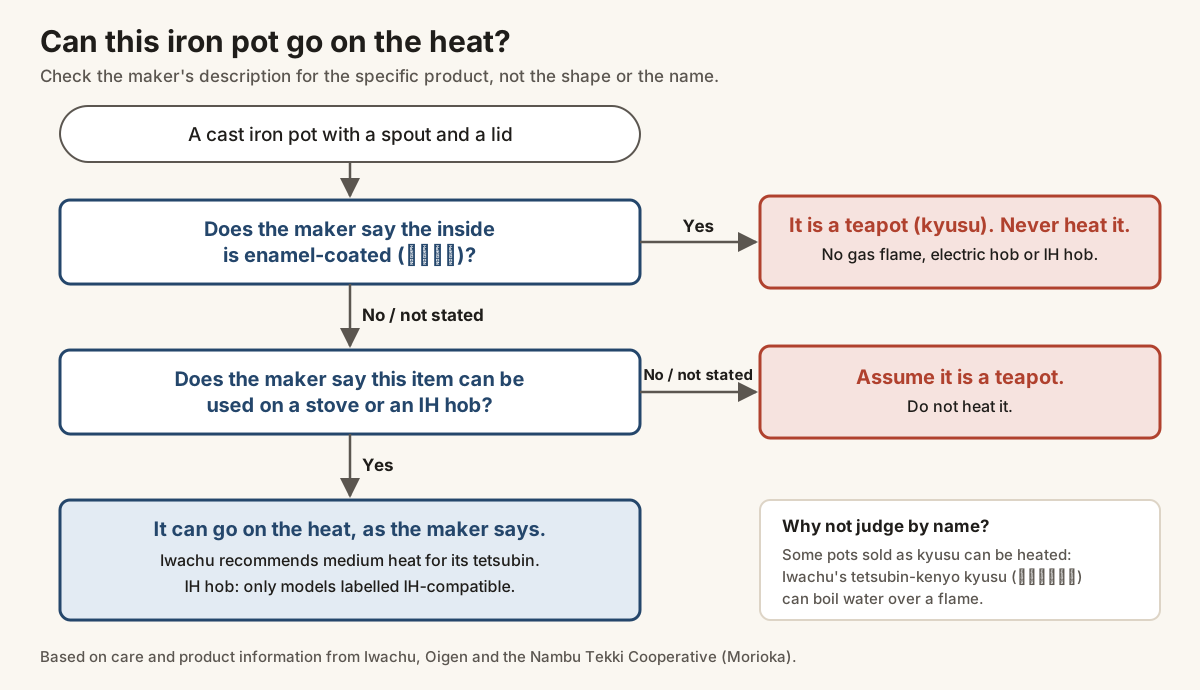
How to tell which one you are buying
When shopping, especially online, run through this checklist:
- Read the interior description. “Enamel interior” or “enamel-lined” means it is a teapot. The tetsubin care guides from Iwachu, Oigen and the Morioka cooperative do not mention enamel, and Iwachu’s kettle-teapot product page states “no enamel on the inside”.
- Look for clear heat instructions from the maker. A tetsubin’s instructions will talk about heat levels; Iwachu, for example, recommends medium heat. For induction, only models marked as IH-compatible can be used, so do not assume every Nambu pot works on IH.
- Be wary of contradictions. If a listing describes an enamel-lined pot as stovetop-safe, that conflicts with what Japanese makers say about their own kyusu. Ask the seller, or buy elsewhere.
- Check who made it and where. Look for a named maker or workshop and a stated origin in Morioka or Oshu, Iwate. The Iwachu kyusu photographed in that prefectural report, for instance, carries an “IWACHU” mark on the base.
- Buy from the maker or a trusted shop. The Morioka cooperative has warned buyers that look-alike products claiming to be Nambu ironware have been circulating on social media.
Caring for each one
Because a kyusu is enamel-lined and a tetsubin is not, their care is almost opposite. Follow the leaflet that came with your pot first, since makers differ in the details. For a step-by-step tetsubin routine, see our tetsubin care guide.
Tetsubin
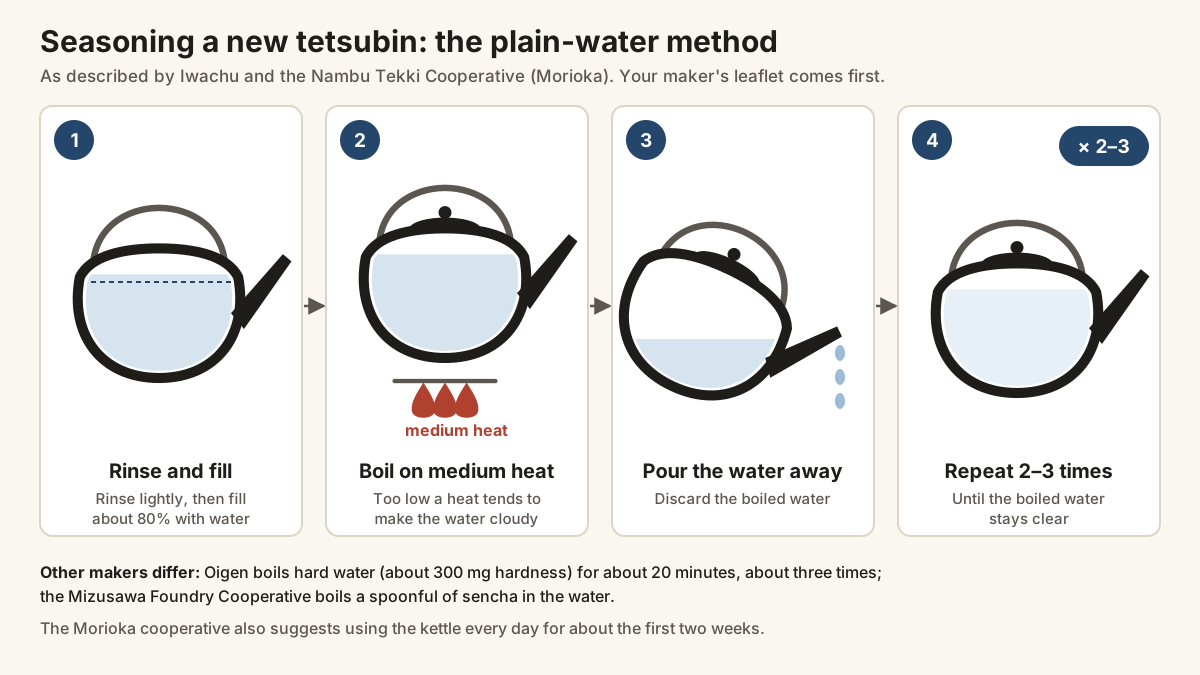
- Before first use: Iwachu’s method is to fill the tetsubin about 80 percent with water, bring it to the boil over medium heat and pour the water away, repeating two or three times until the water stays clear. The cooperative also suggests using it daily for about two weeks at first. Other makers use different methods, such as simmering green tea leaves (Mizusawa’s foundry cooperative, 水沢鋳物工業協同組合) or boiling hard water (Oigen), so follow your own maker’s instructions.
- After each use: pour out all the water. Take the lid off and let the remaining heat dry the inside. Don’t touch the interior.
- Don’t scrub the inside, and don’t use detergent. The white scale and red spots that form inside are not to be scrubbed off. Iwachu says the scale helps keep the water clear and improves its taste, and the cooperative warns not to mistake these early spots for rust and remove them.
- If it rusts: Iwachu says iron rust is not harmful, and if the water does not come out cloudy you can keep using it. If the water turns cloudy or smells, Iwachu suggests simmering green tea in it, starting from cold water, for about 30 minutes, and repeating this three or four times.
- Avoid boiling it dry and sudden cooling. If it does boil dry, Oigen says to wait for it to cool down; pouring in water suddenly may crack it. The cooperative says a badly dry-boiled tetsubin may need to go back to the production area to be refinished.
Iron kyusu
- Never heat it (see above), and don’t heat it empty.
- Don’t leave tea or water in it. Iwachu says leaving tea or hot water standing for more than an hour or two can cause rust.
- Washing: for tea stains, Iwachu suggests filling it with hot water, letting it stand, then washing with a soft sponge and a mild neutral detergent. Do not use metal scourers or abrasives.
- Use a trivet under the pot.
- Handle it gently. Chipped or cracked enamel cannot be repaired.
Common misconceptions
Is every iron pot with a spout a tetsubin? Not to Japanese makers. Tetsubin means an iron kettle for heating water. An enamel-lined pot for brewing tea is a kyusu.
“A kyusu will add iron to my tea.” Oigen says no iron dissolves from an enamel-lined kyusu. For tetsubin, Oigen says the boiled water contains a trace of iron, and that the amount varies with how and where the kettle is used; it gives no figures. We make no health claims either way.
“Nambu ironware is always handmade one-offs.” The traditional method recognised for Nambu tekki uses hand-made moulds called yakigata (焼型), which allow fine shapes and surface textures. Mass-produced pieces made with namagata (生型) moulds are also sold, and Iwachu lists the two types separately. Both can be genuine Japanese products; they are simply made differently.
“Red spots inside a tetsubin mean it is ruined.” Not necessarily. Makers explain that scale and red spots inside are normal and should be left alone. Follow the rust advice above if the water turns cloudy.
Summary
- A tetsubin boils water. An iron kyusu brews tea and is lined with enamel.
- Japanese makers including Iwachu and Oigen, and the Morioka cooperative, say an enamel-lined kyusu must not be heated. Damaged enamel cannot be repaired.
- Exceptions exist, such as Iwachu’s kettle-teapot hybrids, so always read the maker’s description for interior coating and heat instructions.
- Care is almost opposite: don’t scrub or wash a tetsubin’s inside with detergent, and dry it with residual heat; don’t heat a kyusu, and don’t leave tea standing in it.
- When buying, check the maker’s name, the origin (Morioka or Oshu, Iwate) and the seller, and treat any “stovetop-safe enamel teapot” claim with suspicion.
Sources
- https://kougeihin.jp/craft/0701/
- https://www.pref.iwate.jp/_res/projects/default_project/_page_/001/008/996/chuuichiban.pdf
- https://iwachu.co.jp/pages/care-tetsubin
- https://iwachu.co.jp/pages/care-kyusu
- https://iwachu.co.jp/pages/faq
- https://iwachu.co.jp/pages/iwachu_online_store
- https://iwachu.co.jp/pages/about-us
- https://oigen.jp/pages/q-a
- https://www.ginga.or.jp/nanbu/
- https://www.ginga.or.jp/nanbu/use.html
- https://oshu-nambutekki.com/category/howtouse/
- https://www2.pref.iwate.jp/~kiri/study/report/2017/pdf/H29R_12.pdf
- https://www2.pref.iwate.jp/~hp0910/tayori/101p4.pdf
- https://www.city.morioka.iwate.jp/_res/projects/default_project/_page_/001/050/277/250201_02-03-1.pdf
- https://iwachu.co.jp/products/12822
- https://iwachu.co.jp/en/pages/care-kyusu
- https://iwachu.co.jp/en/products/12822
.jpg)