How Traditional Kintsugi Works: Urushi, Steps and Key Terms
Takumi Path is reader-supported. Some links on this page are affiliate links: if you buy or book through them, we may earn a commission at no extra cost to you. Learn more.
Key points
- In kintsugi, the gold does not hold anything together: the adhesive is urushi, a natural lacquer made from the sap of the urushi tree.
- Urushi does not dry by evaporation. It hardens by reacting with oxygen in humid air, so each stage of a repair needs time to cure.
- A traditional repair moves through six stages, from sealing the broken edges with lacquer (漆固め) to kinpun-maki (sprinkling gold powder), and a workshop repair usually takes months.
- A join finished with gold powder is kintsugi, one finished with silver is gintsugi, and a join left as plain lacquer is urushi-tsugi.
- Kintsugi is a repair technique, not one of Japan's officially designated Traditional Crafts.
Contents
- What is kintsugi?
- Lacquer is the glue; gold is the finish
- A repair technique, not a designated Traditional Craft
- A very short history
- Urushi: the material that holds it together
- What urushi is
- Why lacquer cures in humidity
- The six steps of traditional kintsugi
- 1. Sealing the broken edges with lacquer
- 2. Mugi-urushi: gluing with wheat-flour lacquer
- 3. Kokuso: filling what is missing
- 4. Sabi-urushi: building a smooth ground
- 5. Nuri: lacquering
- 6. Kinpun-maki: sprinkling gold powder
- How long a workshop repair takes
- Breaks, chips and cracks
- Gold, silver and other finishes
- Caring for a kintsugi-repaired piece
- Where to get a piece repaired in Japan
- Kintsugi terms at a glance
- Summary
Kintsugi (金継ぎ) is the Japanese way of mending broken ceramics with urushi (漆, Japanese lacquer) and gold. A Kyoto lacquer merchant that repairs tableware describes it in one line: “a traditional technique of repairing with lacquer and gold.”
Most pictures of kintsugi show the gold lines, so it is easy to assume the gold does the work. It does not. This guide explains what actually holds a repaired bowl together, the six stages of a traditional repair and the purpose of each, the terms you will meet in Japanese workshops, how to look after a mended piece, and where in Japan you can have something repaired. It draws on Japanese public bodies, lacquer merchants and kintsugi workshops.
What is kintsugi?
Lacquer is the glue; gold is the finish
An article in the journal of the Japan Society of Material Cycles and Waste Management (廃棄物資源循環学会) puts it plainly: gold itself has no power to join broken pieces. The adhesive is urushi.
The same article sets out how the names follow the finish:
- Pieces joined with lacquer alone are urushi-tsugi (漆継ぎ, “lacquer joining”).
- If lacquer is then applied over the join again and gold powder is applied, it becomes kintsugi.
- If silver powder is used instead, it becomes gintsugi (銀継ぎ, “silver joining”).
Traditionally, according to the same article, kintsugi was done by lacquer specialists called nushi (塗師, also read nurishi), people whose trade was working with urushi. Today there is also a job title of kintsugi-shi (金継ぎ師, kintsugi repairer).
A repair technique, not a designated Traditional Craft
Japan’s Minister of Economy, Trade and Industry designates Traditional Crafts (伝統的工芸品), crafts tied to production areas that use long-established methods. As of 27 October 2025 there were 244 of them, and none is kintsugi. Kintsugi is a repair technique practised across Japan, not a designated craft of any one place. Phrases such as “kintsugi, a nationally designated traditional craft” are wrong. We could not confirm whether kintsugi itself has any cultural-property status.
It is closely related to one that does. Maki-e (蒔絵), the technique of drawing designs in lacquer and sprinkling gold, silver or other metal powder onto it before it dries, was designated an Important Intangible Cultural Property in 1955, according to the Japan Tourism Agency’s multilingual commentary database. The gold-dusting step of kintsugi works on the same principle.
A very short history
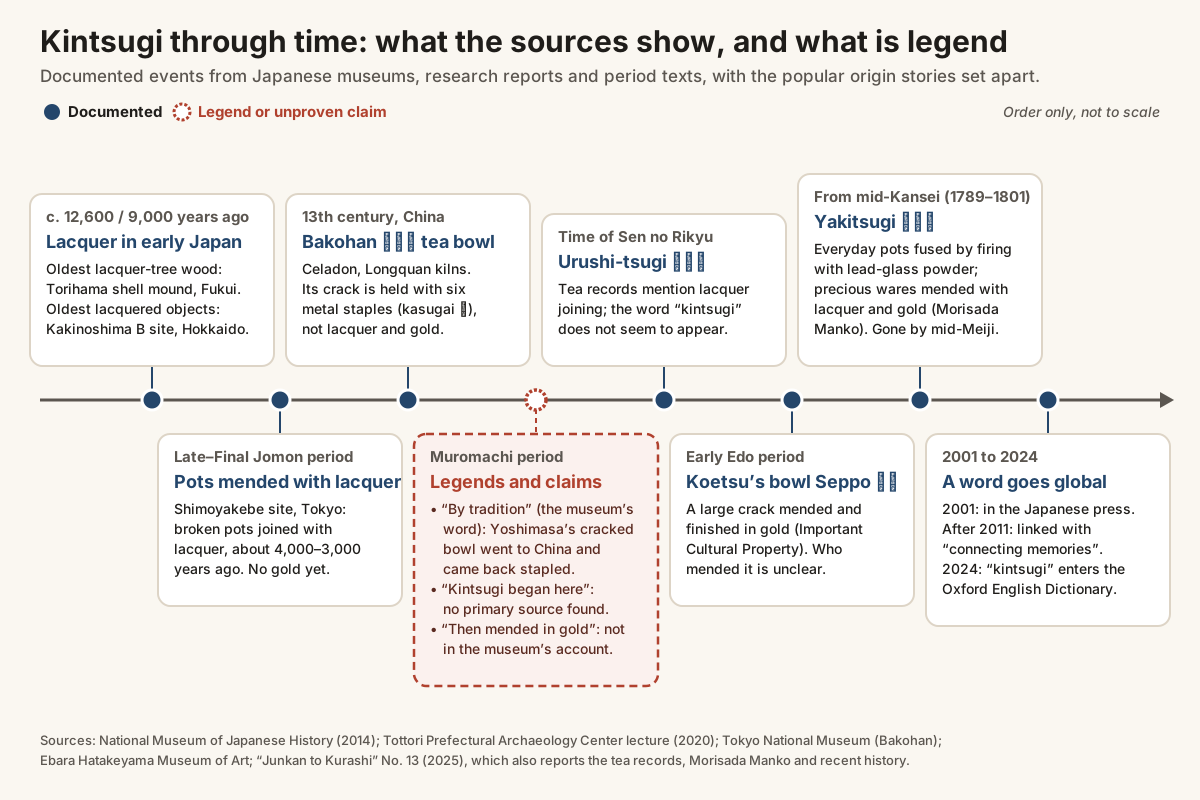
Repairing pottery with lacquer is old. A research report from the National Museum of Japanese History (国立歴史民俗博物館) describes how Jomon-period pots from the Shimoyakebe site (下宅部遺跡) in Higashimurayama (東村山市), Tokyo, were repaired with lacquer, and how the kind of damage matched the repair method and the type of lacquer used. That shows that mending with lacquer goes back to the Jomon period; it does not mean gold kintsugi began then.
The well-known story that kintsugi was born when the shogun Ashikaga Yoshimasa sent a cracked tea bowl to China is not what the museum that owns the bowl says. Our history of kintsugi sets out what the records show and what is legend.
Urushi: the material that holds it together
What urushi is
Urushi is a natural coating and adhesive made from the sap tapped from the bark of the urushi tree. A lecture handout from the Tottori Prefectural Archaeological Centre (鳥取県埋蔵文化財センター) notes that the tree belongs to the same family as the mango, pistachio and cashew, but only the urushi tree is used to make lacquer.
The handout distinguishes three stages of the lacquer:
| Lacquer | Japanese | What it is |
|---|---|---|
| Arami-urushi | 荒味漆 | The sap as collected |
| Ki-urushi (raw lacquer) | 生漆 | Filtered sap. Milky. Also used for undercoats |
| Suki-urushi (clear lacquer) | 透漆 | Refined lacquer, also called kurome-urushi (黒目漆). Transparent with a brownish tint. Used for top coats |
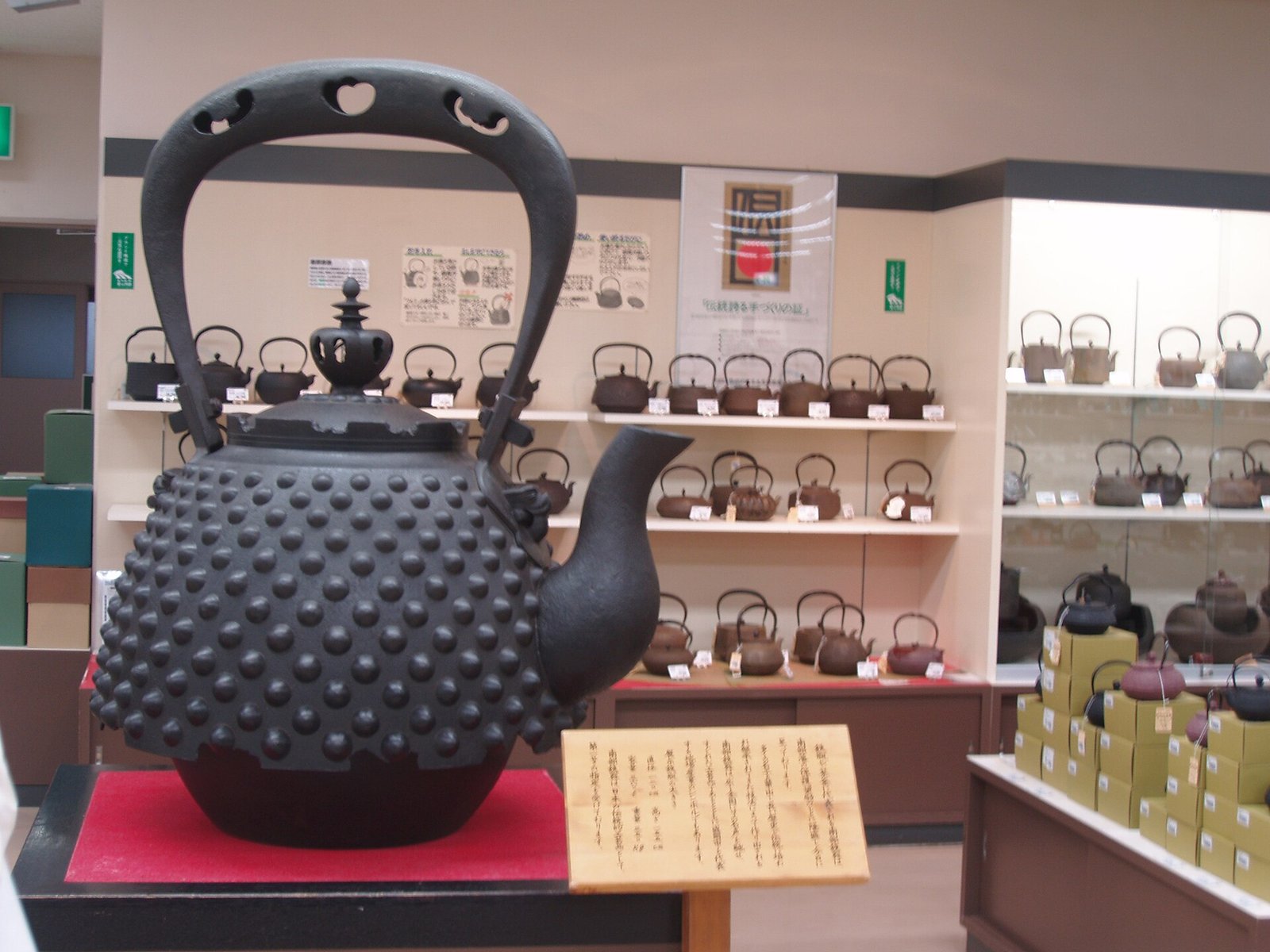
Very little of it is Japanese-grown. The Ministry of Agriculture, Forestry and Fisheries (農林水産省) reports that about 91% of the lacquer used in Japan is imported and 9% is domestic, and that about 82% of the domestic lacquer (2021) came from northern Iwate Prefecture (岩手県), around Ninohe (二戸市). Iwate is also home to Nambu tekki, the cast ironware whose kettles are coloured with a coat of urushi.
Why lacquer cures in humidity
Urushi does not dry the way paint does. As the Tottori handout puts it, it does not harden because water or solvent evaporates. The Japan Science and Technology Agency’s (科学技術振興機構) Science Portal explains the chemistry: urushiol (ウルシオール), the main component, reacts with oxygen in the air through the action of an enzyme, laccase (ラッカーゼ), and polymerises into a hard resin.
What this means in practice:
| Condition | What happens (JST Science Portal unless noted) |
|---|---|
| Humidity 60–80%, temperature 20–30°C | The conditions urushi needs to cure |
| About 25°C and 70–80% humidity | The best environment for laccase, according to the Tottori handout |
| Above 40°C | Urushi stops curing |
| Above 100°C | Urushi does cure, by heat; the kintsugi class JST visited uses an electric kiln to force-cure lacquer and save time |
Because the lacquer takes in moisture and oxygen from the air and hardens slowly, the waste-management journal article notes that a lacquer join needs the right humidity and several weeks to several months. This is why kintsugi workshops cure their work in humid conditions and why a traditional repair cannot be rushed.
The six steps of traditional kintsugi
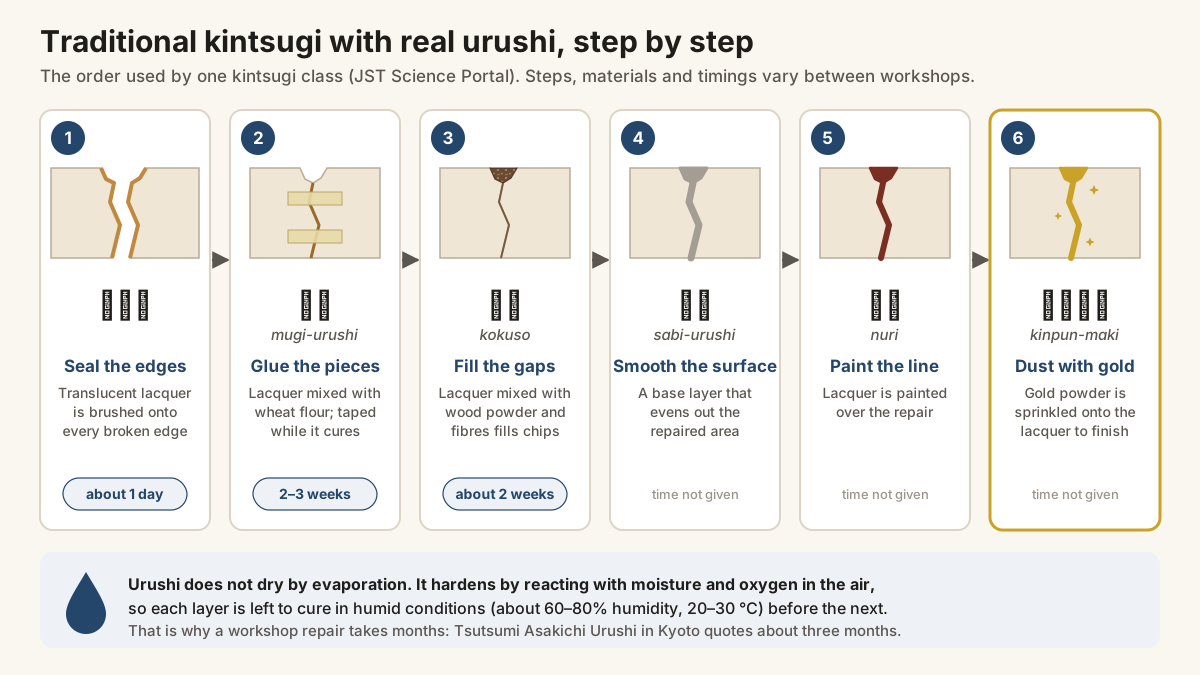
The JST Science Portal, reporting on a kintsugi class run by a lacquer shop in Tokyo, describes a repair that uses urushi at every stage, in the following order. Steps and timings differ between workshops, so treat the durations as one class’s guide, not a rule.
| # | Step | Japanese (reading) | Purpose | Time in the JST report |
|---|---|---|---|---|
| 1 | Sealing the break | 漆固め | Coat every broken surface with clear lacquer | About 1 day |
| 2 | Gluing with wheat-flour lacquer | 麦漆 (mugi-urushi) | Glue the pieces together | 2–3 weeks |
| 3 | Filling | 刻苧付け (kokuso-zuke) | Fill in missing parts | About 2 weeks |
| 4 | Smoothing with sabi lacquer | 錆漆付け (sabi-urushi-zuke) | Build a smooth ground over the repair | Not given |
| 5 | Lacquering | 塗り (nuri) | Coat the repair with lacquer | Not given |
| 6 | Sprinkling gold powder | 金粉蒔き (kinpun-maki) | Finish the line in gold | Not given |
1. Sealing the broken edges with lacquer
Clear lacquer (suki-urushi) is applied to all the broken faces and left to cure for about a day. This first coat prepares the surfaces before anything is glued.
2. Mugi-urushi: gluing with wheat-flour lacquer
Mugi-urushi (麦漆) is lacquer mixed with wheat flour kneaded with water. In the JST report it is spread thinly on the broken edges and left for about 30 minutes; the pieces are then pressed together before it fully sets and held with tape for two to three weeks. Sources differ on whether raw or clear lacquer goes into the mix, which suggests it varies between schools.
3. Kokuso: filling what is missing
Where a piece of the body is missing, the gap is filled with kokuso-urushi (刻苧漆), made, in the JST report’s words, by mixing clear lacquer with wood powder and fibres. It is left about two weeks.
4. Sabi-urushi: building a smooth ground
Sabi-urushi (錆漆) evens out the surface of the repair. The JST report names the step without its ingredients. In the groundwork of Japanese lacquerware, the Tottori handout describes sabi as tonoko (砥粉, fine polishing-stone powder) mixed with raw lacquer; recipes for kintsugi may vary by workshop.
5. Nuri: lacquering
A coat of lacquer is painted along the repair line. This is the layer the metal powder will stick to.
6. Kinpun-maki: sprinkling gold powder
Gold powder is sprinkled onto the lacquer to finish. Like maki-e, the powder is applied while the lacquer has not yet hardened, so it is fixed in place as the lacquer cures.
Each of these stages uses lacquer that has to cure before the next one can begin, which is why a traditional repair takes so long.
How long a workshop repair takes
| Who | Time stated | Note |
|---|---|---|
| Tsutsumi Asakichi Urushi (堤淺吉漆店), Kyoto | About 3 months | Because natural lacquer takes time to harden |
| Tsugu Tsugu (つぐつぐ), Tokyo | At least 3 months (English page) | Its Japanese site says the wait is at least 6 months because of demand; a 2021 article on its partnership with Muji gave 1–3 months, or six months to a year depending on damage |
| Hatoya’s kintsugi library (金継ぎ図書館), a Japanese site that explains kintsugi methods | Usually 1 week to 1 month | A guide for doing hon-urushi kintsugi yourself, not a workshop order |
These figures measure different things, but the pattern is clear: if you ask a workshop to repair a piece in real urushi, expect it to take months.
Breaks, chips and cracks
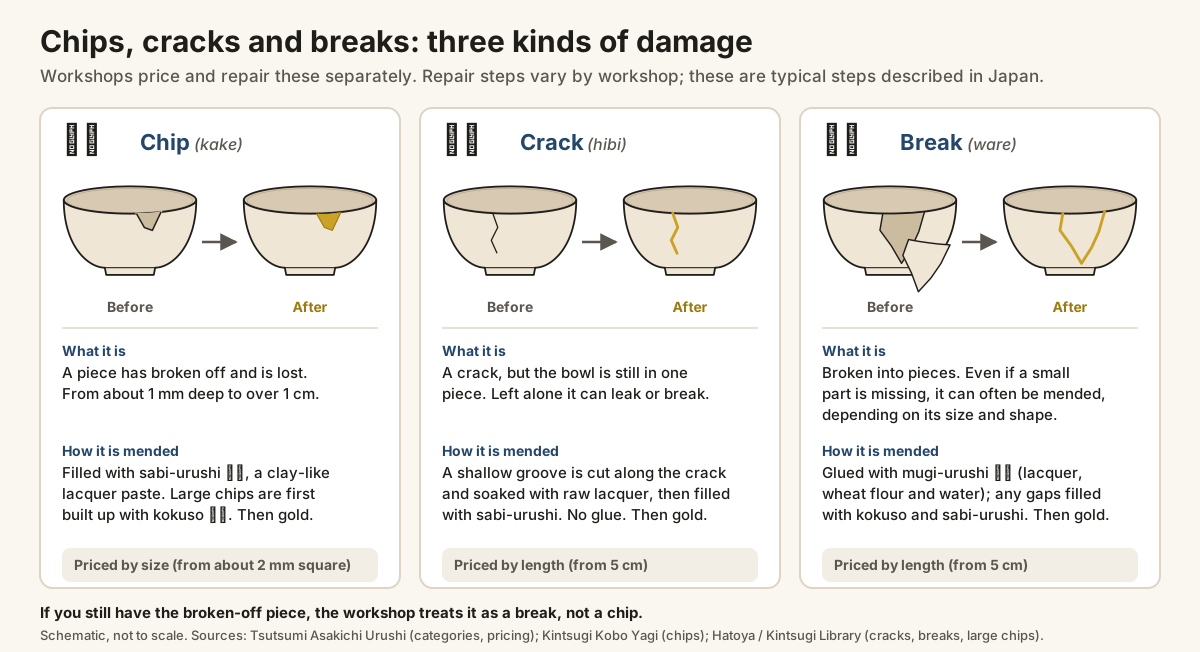
Workshop price lists sort damage into three kinds. Tsutsumi Asakichi Urushi’s list, for example, prices chips, cracks and breaks separately.
| Damage | Japanese | What it means | Main steps | Tsutsumi Asakichi Urushi’s reference price |
|---|---|---|---|---|
| Chip | 欠け (kake) | A piece of the rim or body is missing | Fill the gap with sabi-urushi; a large chip is first filled with kokuso, then sabi-urushi | About 2 mm square from ¥5,780; about 1 cm square from ¥9,000 |
| Crack | ひび (hibi) | A crack runs into the piece, but it has not come apart | Carve a shallow groove along the crack, let raw lacquer soak in, then apply sabi-urushi. No mugi-urushi, since nothing needs gluing | 5 cm from ¥7,430; 10 cm from ¥10,800 |
| Break | 割れ (ware) | The piece has come apart | Glue the pieces with mugi-urushi; if any part is missing, fill it with kokuso and sabi-urushi | 5 cm from ¥8,480; 20 cm from ¥13,500 |
All three are then lacquered and finished with metal powder. Prices are before tax, as listed on 11 October 2026.
Where the steps come from: the method for chips is described by Kintsugi Kobo Yagi (金継ぎ工房八木), a kintsugi workshop, which notes that a chip is filled with clay-like sabi-urushi and can be repaired even if the missing fragment is lost; the distinction between large and small chips, and the methods for cracks and breaks, come from Hatoya’s kintsugi library, a Japanese information and learning site on kintsugi. Methods vary between workshops. Kintsugi Kobo Yagi, for example, says that when a crack in a glass points upward, it may break the piece once and then glue and repair it.
Gold, silver and other finishes
| Finish | What the join becomes | Source |
|---|---|---|
| None (lacquer only) | Urushi-tsugi | Waste-management journal article |
| Gold powder | Kintsugi | Same |
| Silver powder | Gintsugi | Same |
Within gold, the size and shape of the powder also matters. The Japan Tourism Agency’s commentary on maki-e notes that craftspeople use metal powders of different sizes to change texture and lustre. Two kinds come up most in kintsugi:
| Powder | Japanese (reading) | What it is | Look and wear in kintsugi |
|---|---|---|---|
| Keshifun | 消粉 (keshifun) | Gold or silver leaf mixed with glue or starch syrup, dried and rubbed into powder (Nihon Kokugo Daijiten dictionary) | A weak shine with a matte look. Because the particles are so thin, it wears through to the layer below more easily than other powders. Sprinkled and left as is, without polishing |
| Marufun | 丸粉 (marufun) | Metal powder flattened and then rounded into grains (Daijisen and Nihon Kokugo Daijiten dictionaries); sold in sizes from fine to coarse by Minowa Urushi (箕輪漆行), a lacquer merchant | A metallic shine. The thicker grains give the highest resistance to wear. It can be polished, but the work is split over several days |
The kintsugi descriptions in the right-hand column come from Hatoya’s kintsugi library. Japanese sources also describe other powders, such as hirafun (平粉), but their descriptions disagree, so we leave them out.
Some workshops also offer brass powder, which looks gold but is not gold. Whether a finish other than gold or silver suits tableware is covered in our guide to real urushi and epoxy kits.
Caring for a kintsugi-repaired piece
Tsutsumi Asakichi Urushi gives these warnings for tableware it has repaired:
- No microwave and no dishwasher.
- Not recommended for pieces used over an open flame, such as clay pots (donabe). Heat can make the gold or silver spark.
Tsugu Tsugu’s English repair page adds more detail for its own repairs:
- Wash the repaired part gently with ordinary dish soap and do not scrub.
- No oven either.
- Avoid long steaming and sudden temperature changes, and do not pour boiling water into the piece.
- Do not soak it for long, keep knives and cutlery off the join, and stack it apart from other dishes.
- Store it out of direct sunlight, and do not lift it by thin handles.
- After it comes back from the workshop, wait about a month before using it every day.
Where to get a piece repaired in Japan
These two workshops publish their repair terms. Prices are as listed on 11 October 2026 and can change.
| Workshop | How to send a piece | Prices (examples) | Time | From overseas |
|---|---|---|---|---|
| Tsutsumi Asakichi Urushi, Kyoto (founded 1909) | Pay first, then bring the piece in or post it (you pay postage). Returned by post or collected at the shop. Western and Japanese tableware, whatever the piece cost | Chip about 2 mm square from ¥5,780; crack 5 cm from ¥7,430; break 5 cm from ¥8,480 (before tax, reference prices). Natural lacquer only | About 3 months | Not stated |
| Tsugu Tsugu, Ebisu (恵比寿) and Asakusa (浅草), Tokyo | Bring it in (30-minute estimate, by appointment), hand it in at the Muji (無印良品) Shinjuku-dori store (drop-off only, no consultations), or post it to the Asakusa shop from within Japan | Chip under 0.5 cm from ¥3,300; a break into two pieces, 18 cm, ¥20,900 (English page) | At least 3 months; a rush service at Ebisu at double the price, from 1 month | Not accepted. Finished pieces are also sent within Japan only |
In our research we did not find a Japanese workshop that accepts pieces posted from abroad.
If you live outside Japan, one option is to repair the piece yourself with a real-urushi kit (see our kit guide).
Kintsugi terms at a glance
| Term | Japanese | Meaning |
|---|---|---|
| Kintsugi | 金継ぎ | Repairing with urushi and finishing the join with gold powder |
| Gintsugi | 銀継ぎ | The same, finished with silver powder |
| Urushi-tsugi | 漆継ぎ | A join made with lacquer alone |
| Urushi | 漆 | Lacquer from the sap of the urushi tree; the adhesive in kintsugi |
| Urushiol | ウルシオール | The main component of urushi; what makes it cure, and what causes rashes |
| Ki-urushi | 生漆 | Raw lacquer: filtered sap, milky |
| Suki-urushi | 透漆 | Clear, refined lacquer with a brownish tint |
| Sealing the broken edges (step 1) | 漆固め | Coating the broken surfaces with clear lacquer before gluing |
| Mugi-urushi | 麦漆 | Lacquer mixed with wheat flour, used as glue |
| Kokuso | 刻苧 | Filler of lacquer with wood powder and fibres |
| Sabi-urushi | 錆漆 | Smoothing ground; in lacquerware, tonoko and raw lacquer |
| Tonoko | 砥粉 | Fine polishing-stone powder used in sabi |
| Kinpun-maki | 金粉蒔き | Sprinkling gold powder onto wet lacquer |
| Keshifun | 消粉 | Gold or silver powder made from leaf; matte and less resistant to wear |
| Marufun | 丸粉 | Rounded grains of metal powder; metallic shine, most resistant to wear |
| Maki-e | 蒔絵 | Decorating lacquer with sprinkled metal powder; the same principle as the gold finish |
| Kake / hibi / ware | 欠け / ひび / 割れ | Chip / crack / break |
| Nushi (also nurishi) | 塗師 | Lacquer craftsman; traditionally the people who did kintsugi |
| Kintsugi-shi | 金継ぎ師 | Kintsugi repairer |
Summary
- In kintsugi the urushi lacquer is the adhesive; gold or silver powder is the final layer. Gold makes it kintsugi, silver makes it gintsugi, and plain lacquer is urushi-tsugi.
- Urushi cures by reacting with oxygen in humid air (about 60–80% humidity, 20–30°C), not by drying, so each stage needs time.
- A traditional repair runs through sealing the broken edges with lacquer (漆固め), mugi-urushi, kokuso, sabi-urushi, nuri and kinpun-maki, and a workshop repair usually takes months (about 3 at Tsutsumi Asakichi Urushi).
- Kintsugi is a repair technique, not a designated Traditional Craft; the related technique of maki-e is an Important Intangible Cultural Property.
- Keep mended pieces out of the microwave and dishwasher and off open flames.
- Japanese workshops such as Tsutsumi Asakichi Urushi and Tsugu Tsugu repair pieces brought or posted to them within Japan; we found none that takes posted pieces from abroad.
Sources
- https://www.tsutsumi-urushi.com/kintsugi
- https://www.tsutsumi-urushi.com/
- https://jsmcwm.or.jp/journal/files/2025/09/050roberts-taira.pdf
- https://scienceportal.jst.go.jp/stories/20231115_w01/
- https://www.pref.tottori.lg.jp/secure/1326827/0718urusi.pdf
- https://www.mlit.go.jp/tagengo-db/common/001653228.pdf
- https://kyokai.kougeihin.jp/wp/wp-content/uploads/2025/10/shitei-area_20251027.pdf
- https://www.maff.go.jp/j/pr/aff/2211/spe1_02.html
- https://rekihaku.repo.nii.ac.jp/records/305
- https://www.pref.shimane.lg.jp/infra/nature/shizen/shimane/sizennkansatu/wasigamine/kiken-syokubutu.html
- https://kintsugi-girl.com/
- https://kintsugi-kit.com/pages/professional-kintsugi-repair-requests
- https://www.fashionsnap.com/article/2021-09-16/tsugutsugu-muji/
- https://hatoya-f.com/simple-kintsugi/kintsugi-variation/
- https://kotobank.jp/word/%E5%A1%97%E5%B8%AB-594168
- https://www.kintunagi.com/
- https://hatoya-f.com/real-kintsugi/korean-cup-01/
- https://hatoya-f.com/real-kintsugi/kintsugi-light-blue-plate-01/
- https://hatoya-f.com/real-kintsugi/makie-powder01/
- https://kotobank.jp/word/%E6%B6%88%E7%B2%89
- https://kotobank.jp/word/%E4%B8%B8%E7%B2%89
- https://kotobank.jp/word/%E5%B9%B3%E7%B2%89
- https://urushiya.ocnk.net/product/777
_-_Flickr_-_dalbera.png)