Real Urushi vs Epoxy Kintsugi: Is Your Kintsugi Kit Food Safe?
Takumi Path is reader-supported. Some links on this page are affiliate links: if you buy or book through them, we may earn a commission at no extra cost to you. Learn more.
Key points
- A Japanese kintsugi information site sorts kintsugi into three kinds: all genuine urushi, a hybrid with a synthetic adhesive, and fully synthetic 'simple kintsugi'.
- Japanese makers of synthetic 'urushi' paints say in their own product descriptions that they must not be used on tableware that touches the mouth.
- Workshops that repair with genuine urushi say the piece can be used as tableware once the lacquer has fully cured, which takes weeks or months, not hours.
- Before buying a kit, check the label for the adhesive, the coating, the metal powder and what the maker says about food use.
- The Kyoto lacquer shop Tsutsumi says even a bowl mended with genuine urushi cannot go in the microwave or dishwasher, and does not recommend using it over direct flame.
Contents
- The short answer
- Three kinds of kintsugi
- Genuine urushi vs synthetic lacquer vs epoxy
- What the makers of synthetic lacquer say
- What workshops say about epoxy
- What workshops say about genuine urushi
- How to read a kintsugi kit label: a checklist
- Kintsugi kits made with genuine urushi in Japan
- Urushi rash: what to know before you start
- How to care for a kintsugi-repaired bowl
- Common misconceptions
- Summary
Search for a “kintsugi kit” and you will find kits of every kind, from a few dollars to a few hundred. Many look alike: a small tube or two, a brush and a bag of gold-coloured powder. But what holds the pieces together, and what covers the join, can be completely different materials. That matters most if you want to eat or drink from the bowl again.
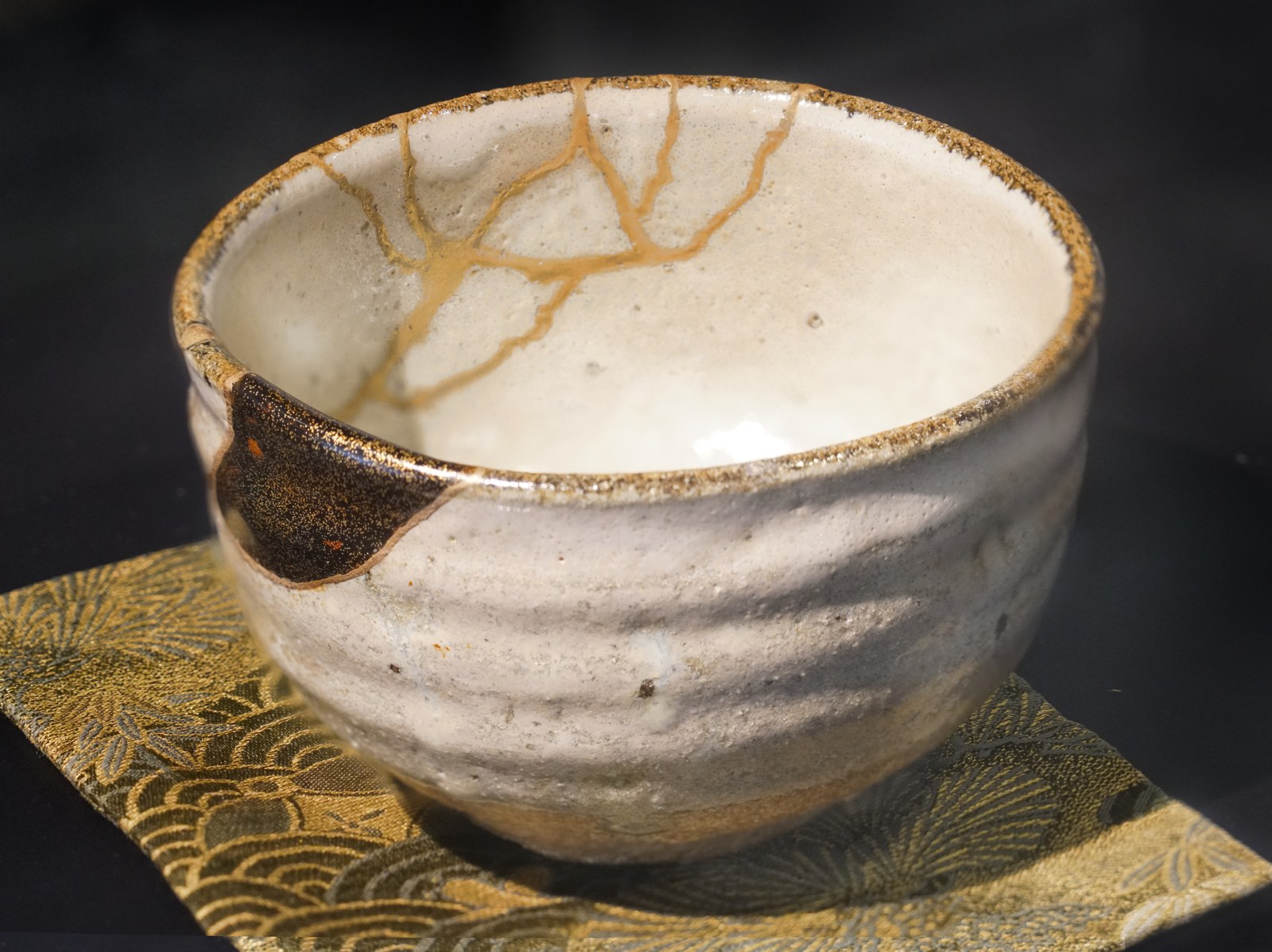
Kintsugi (金継ぎ) is a way of mending broken pottery. Tsutsumi Asakichi Urushi (堤淺吉漆店), a lacquer shop in Kyoto (京都) founded in 1909, defines it simply as “a traditional technique of repair using lacquer and gold”. In the traditional method, the gold is only the finish. The glue is urushi (漆, Japanese lacquer), the sap of the lacquer tree. This guide compares genuine urushi with the synthetic lacquers and epoxy used in many kits. It is based on what Japanese lacquer shops, kintsugi workshops and the makers of the synthetic paints say about their own materials. For the full repair process, see our guide to how kintsugi works.
The short answer
- Genuine urushi: Japanese workshops that repair with genuine urushi say the piece can be used as tableware once the lacquer has fully cured. One of them, Tsugu Tsugu, also states in its repair terms that its repairs contain ingredients that have not been tested under Japan’s food safety law (see below). Lacquer has coated tableware in Japan since ancient times, and a guide published by the Tottori Prefecture (鳥取県) archaeology centre states that fully dried urushiol (ウルシオール), the substance in lacquer that causes rashes, no longer causes them.
- Synthetic “urushi” paints: the Japanese makers of these paints say in their own product descriptions that they must not be used on tableware or anything that goes in the mouth.
- Epoxy: Tsugu Tsugu (つぐつぐ), a kintsugi workshop in Tokyo (東京), says on its English-language page that its epoxy-based workshop “is not intended for repairing tableware for food use.” Epoxy products differ, so check what the maker of your specific product says.
Three kinds of kintsugi
Hatoya’s Kintsugi Library (鳩屋 / 金継ぎ図書館), a Japanese kintsugi information site with articles and lessons on all three methods, sorts kintsugi into three kinds by material:
| Kind | Japanese | Adhesive and filler | Coating | Notes from Hatoya |
|---|---|---|---|---|
| Genuine urushi kintsugi | 本漆金継ぎ (hon-urushi kintsugi) | Genuine urushi | Genuine urushi | Uses “only real lacquer” |
| Hybrid | 簡漆金継ぎ | Synthetic resin | Genuine urushi | Only the coating is real lacquer |
| Simple kintsugi | 簡易金継ぎ (kan’i kintsugi) | Synthetic resin | Synthetic lacquer, such as shin-urushi (新うるし) | Can be done in one day |
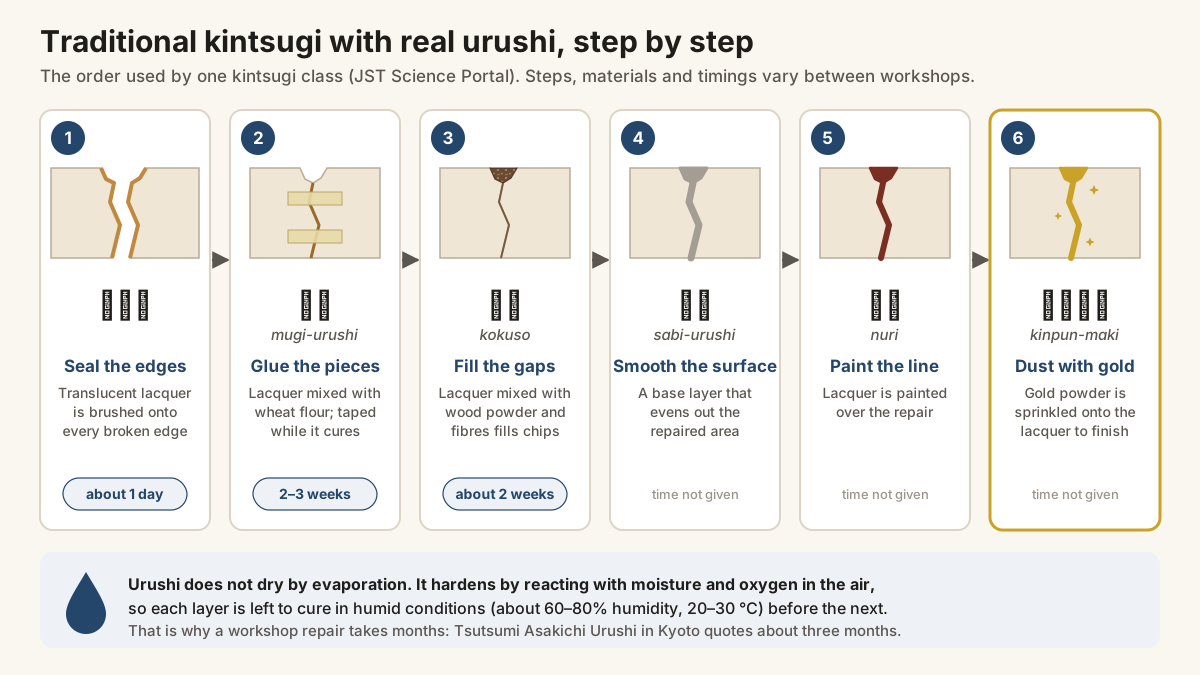
In traditional kintsugi, even the glue is lacquer. For example, the pieces are joined with mugi-urushi (麦漆), lacquer mixed with wheat flour kneaded with water, according to a Japan Science and Technology Agency (JST) report on a kintsugi class. Gaps are then filled and the surface built up with further lacquer mixtures before the join is painted and dusted with gold.
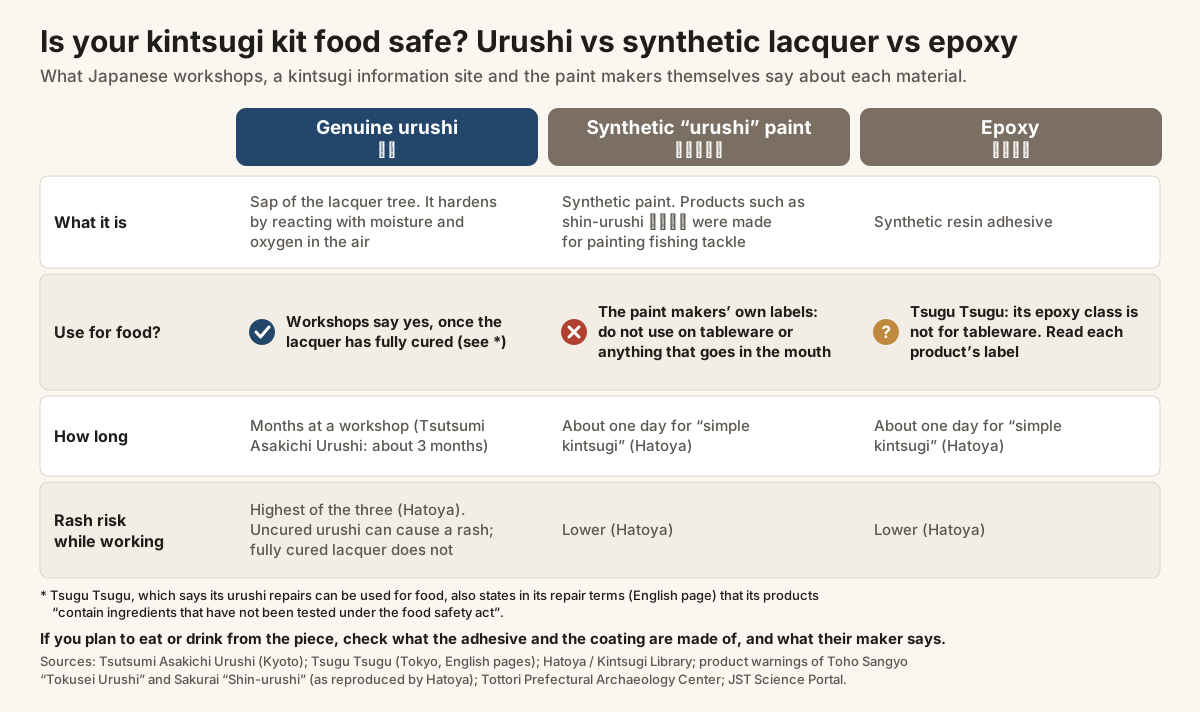
Genuine urushi vs synthetic lacquer vs epoxy
| Genuine urushi | Synthetic “urushi” paint | Epoxy | |
|---|---|---|---|
| What it is | Sap of the lacquer tree, which hardens by reacting with oxygen in the air | Synthetic paint; products such as shin-urushi were originally made for painting fishing tackle | Synthetic resin adhesive |
| Tableware use, according to the makers or workshops | Workshops say it can be used for food once fully cured; Tsugu Tsugu’s repair terms add that its repairs contain ingredients not tested under the food safety act | Makers say not to use it on anything that touches the mouth | Tsugu Tsugu (English-language page): its epoxy workshop is not for tableware. Check what the maker of each product says |
| How long it takes | Months at a workshop (Tsutsumi: about 3 months). Hatoya gives about 1 week to 1 month as a guide for doing it yourself | Hatoya: simple kintsugi can be done in one day | Hatoya: simple kintsugi can be done in one day |
| Conditions to cure | High humidity (60 to 80 percent) and a steady temperature (20 to 30°C), according to JST | Follow the product’s instructions | Follow the product’s instructions |
| Rash risk while working | Highest of the three, according to Hatoya. Raw urushi can cause a rash | Lower, according to Hatoya | Lower, according to Hatoya |
| Metal finish | Gold or silver powder; some urushi classes also offer brass powder | Depends on the kit | Tsugu Tsugu’s epoxy workshop uses brass-coloured powder, not real gold (English-language page) |
Hatoya rates genuine urushi as the safest of the three, because it uses only lacquer, whose safety has been proven.
What about the hybrid method? Hatoya says the materials used for gluing and filling in the hybrid method are not safe, and are not suitable for mouth contact. Because genuine urushi is painted over the adhesive and filler, Hatoya thinks the hybrid “can be called relatively safe”. But it adds that if part of the join is left unpainted, or the lacquer wears off with use and the filler or adhesive underneath is exposed, your mouth touches it directly, so “the hybrid method cannot be called 100 percent safe either.” We found no statement on this from a workshop or a lacquer maker; Hatoya’s Kintsugi Library is the only source we found.
We also found no test data comparing how long urushi and epoxy repairs last, so we make no claim about which is more durable.
What the makers of synthetic lacquer say
These warnings are the makers’ own descriptions of their products, so they are the clearest evidence available. We quote them as reproduced by Hatoya; we could not find either maker’s own website. Translations are ours and follow the Japanese wording closely.
- Toho Sangyo (東邦産業), “Tokusei Urushi” (特製うるし): “This product does not meet the standards of the Food Sanitation Act (食品衛生法), so it cannot be used to coat tableware or other items that come into direct contact with the mouth.” (the maker’s description as reproduced by Hatoya)
- Sakurai (桜井釣漁具), “Shin-urushi”: “This product is not a highly toxic substance, but as a precaution, do not coat tableware or other items that may be put in the mouth.” (the maker’s description as reproduced by Hatoya)
Hatoya’s Kintsugi Library concludes that for simple kintsugi with synthetic resin and synthetic lacquer, “honestly, we have to say the safety is low.” It suggests not using such pieces in ways that touch the mouth, and keeping them for display or as small containers instead.
What workshops say about epoxy
Tsugu Tsugu runs two kinds of workshop in Tokyo. Its traditional workshop uses genuine urushi and 23-karat gold powder. Its shorter “Kintsugi-style” workshop uses epoxy and brass-coloured powder with no lacquer, and the workshop’s English-language page states: “It is not intended for repairing tableware for food use.”
If you choose epoxy, read that specific product’s label and instructions, and follow them.
What workshops say about genuine urushi
Tsutsumi says it repairs “only with natural lacquer”, and gives care instructions on the assumption that the repaired pieces will be used as tableware. Tsugu Tsugu says on its English site that, because it uses only genuine urushi and natural materials, the pieces it repairs can be used for food. It also asks customers to wait about a month after being told the repair is finished before using the piece every day.
The same English-language page also sets out the terms of its repair service. Under “Characteristics of Kintsugi Repair Products”, it notes: “Synthetic resins may be used in glass repair due to the weak adhesion of lacquer to glass.” It then says the customer should understand that “this product contains ingredients that have not been tested under the food safety act.” So Tsugu Tsugu describes its urushi repairs as usable for food, and its terms also say the repaired pieces have not been tested under that law. Both statements are on its English-language page; we did not find these terms on its Japanese-language pages.
How to read a kintsugi kit label: a checklist
Use these questions when you compare kits, online or in a shop.
- What is the adhesive? In genuine urushi kintsugi, the glue is lacquer (for example mugi-urushi, lacquer mixed with wheat flour). If the kit’s glue is epoxy or another synthetic resin, it is either the hybrid or the simple kind, even if the coating is urushi.
- What is the coating? Look for “urushi” or “Japanese lacquer” from the lacquer tree. Words such as “synthetic lacquer” or “new urushi” (shin-urushi) point to a synthetic paint.
- Is it cashew-based? An article in Junkan to Kurashi reported that, among kits sold online in the UK in late 2024, the writer found no kits using lacquer. The adhesives were mainly chemical adhesives, or plant-based ones using urushiol from cashew oil. Cashew is in the same plant family as the lacquer tree, but a cashew-based product is not urushi.
- What does the maker say about food use? This is the most important line on the label. Look for a statement from the maker of the product, not just the seller’s description. If the maker says “not for tableware”, believe it.
- What is the metal powder? Kits with real gold say so, for example 23kt gold (Tsugu Tsugu) or 24K gold (KURUKINTOKI). Brass is not gold. Tsugu Tsugu’s English-language workshop page notes that its brass finish “is not certified as food safe.”
- How long does it say the repair takes? Genuine urushi needs time to cure at each step, with controlled humidity. Hatoya describes simple kintsugi as a one-day job.
- Does it warn about skin rashes? Sellers of genuine urushi kits, such as Tsugu Tsugu, warn that raw lacquer can cause a rash. A warning like this is a sign that the kit contains real lacquer, though not proof on its own.
- Who made it and where does it ship from? Look for a named Japanese maker or workshop. Tsugu Tsugu’s English-language shipping policy says Japan Post cannot send liquids such as urushi to the United States, Canada and some other countries, so it ships kits mainly by FedEx.
Kintsugi kits made with genuine urushi in Japan
These are kits from Japanese lacquer shops and workshops that state they use natural lacquer. We have not used these kits ourselves, and we have no affiliate relationship with these shops. Prices, stock and shipping terms were checked on 11 October 2026 and may change.
| Kit | Made by | What the maker says | Price | Ships abroad? |
|---|---|---|---|---|
| Starter / Traditional / Gold Only Tsugu Kit | Tsugu Tsugu (Tokyo) | “Genuine Urushi Kintsugi Repair Kit”. Gold powder: 23kt gold 0.1 g (Starter); gold 0.3 g and silver 0.5 g (Traditional); gold 0.5 g (Gold Only) | $169 / $229 / $279 (USD, English site) | Yes, mainly by FedEx. US customs may ask for a TSCA form. From 3 July 2026, duties and taxes on eligible overseas orders are prepaid where possible |
| Kintsugi Coffret (金継ぎコフレ) | Tsutsumi Asakichi Urushi (Kyoto, founded 1909) | “Natural lacquer, pure gold powder and the other tools you need” | See the shop | Not stated for this kit. For overseas buyers, the company’s English-language shop, urushi.life, sells a different genuine urushi kit, “Urushino ippo -Kintsugi-” (sold out when we checked on 11 October 2026). urushi.life ships by DHL; customs duties and taxes are paid by the buyer |
| KURUKINTOKI | kurumi Inc. (株式会社kurumi, Kyoto) | Uses a special natural lacquer that is less likely to cause rashes, developed by the Kyoto lacquer business Sato Kiyomatsu Shoten (佐藤喜代松商店) with a dermatologist. 24K gold powder (99.9 percent pure) | ¥14,960 including tax (at launch in 2023) | Not confirmed |
Why these three? Each comes from a business that works with lacquer itself and names its material. Tsutsumi is a lacquer shop in Kyoto, and both its kit and its repair service use natural lacquer. Tsugu Tsugu also repairs pottery with genuine urushi in its Tokyo studios. KURUKINTOKI is built around a lacquer developed by a Kyoto lacquer business to reduce the risk of rashes.
Urushi rash: what to know before you start
The trade-off for genuine urushi is the risk of a rash while you work. The cause is urushiol, the main component of lacquer.
- When it appears: in a guide to hazardous wild plants, Shimane Prefecture (島根県) describes the rash caused by plants of the lacquer family as a delayed contact dermatitis that appears one to two days after contact, with very itchy red patches on the face, neck, hands or genitals.
- What to do: Shimane Prefecture advises seeing a medical specialist if you get a rash.
- After curing: the Tottori Prefecture guide states that fully dried urushiol does not cause a rash.
- “Less likely”, not “never”: some lacquers, such as the one in KURUKINTOKI, are sold as less likely to cause rashes. No one claims they cannot.
Tsugu Tsugu warns its kit users: “Touching raw urushi can cause a rash similar to poison ivy.” Wear gloves while handling raw lacquer, and follow the instructions that come with your kit. This guide is not medical advice.
How to care for a kintsugi-repaired bowl
Here is what Japanese workshops that repair with genuine urushi tell their customers. If your piece was mended with a kit, follow the kit maker’s instructions as well.
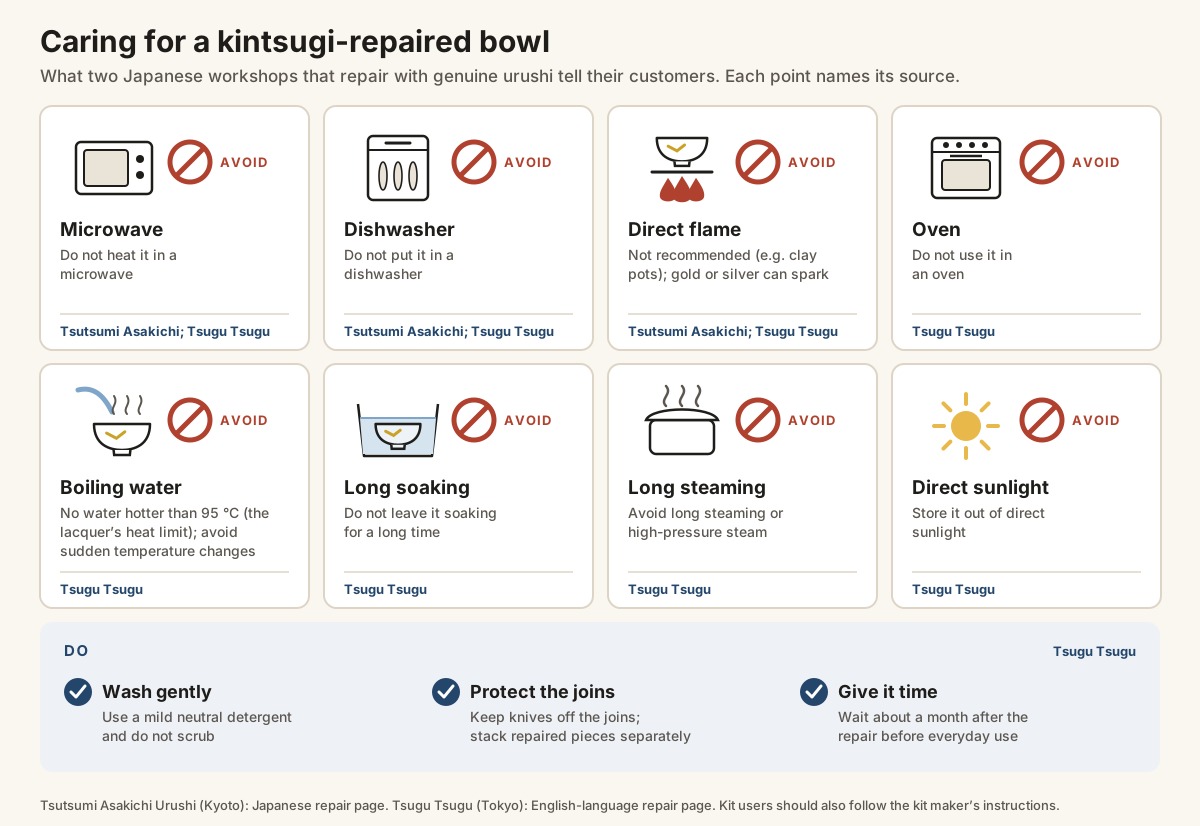
The microwave, dishwasher and direct-flame points come from Tsutsumi. The other points in the table and the list below come only from Tsugu Tsugu’s English-language repair page; we did not find them on its Japanese-language site or from other workshops.
| Can I… | Workshop guidance |
|---|---|
| Put it in the microwave? | No. Tsutsumi: “Please note that kintsugi-repaired tableware cannot be heated in a microwave or used in a dishwasher.” |
| Put it in the dishwasher? | No (same statement from Tsutsumi). |
| Use it over a direct flame? | Not recommended. Tsutsumi: “We do not recommend it for items used over a direct flame, such as donabe (土鍋, clay pots).” Tsutsumi adds that heat can also make the gold or silver spark. |
| Use it in the oven? | No, according to Tsugu Tsugu’s care guide (English). |
| Pour in boiling water? | Tsugu Tsugu asks customers not to pour in boiling water above 95°C, the heat limit of the lacquer, and to avoid sudden temperature changes. |
| Wash it? | Tsugu Tsugu: wash gently with a mild neutral detergent, don’t scrub, and don’t leave it soaking for a long time. |
Tsugu Tsugu’s care guide also asks you to:
- avoid long steaming or high-pressure steam;
- keep knives and other sharp edges off the joins, and stack repaired pieces separately;
- store pieces out of direct sunlight;
- not hold a cup by its handle alone, but support the body with your other hand;
- wait about a month after the repair is finished before using it every day.
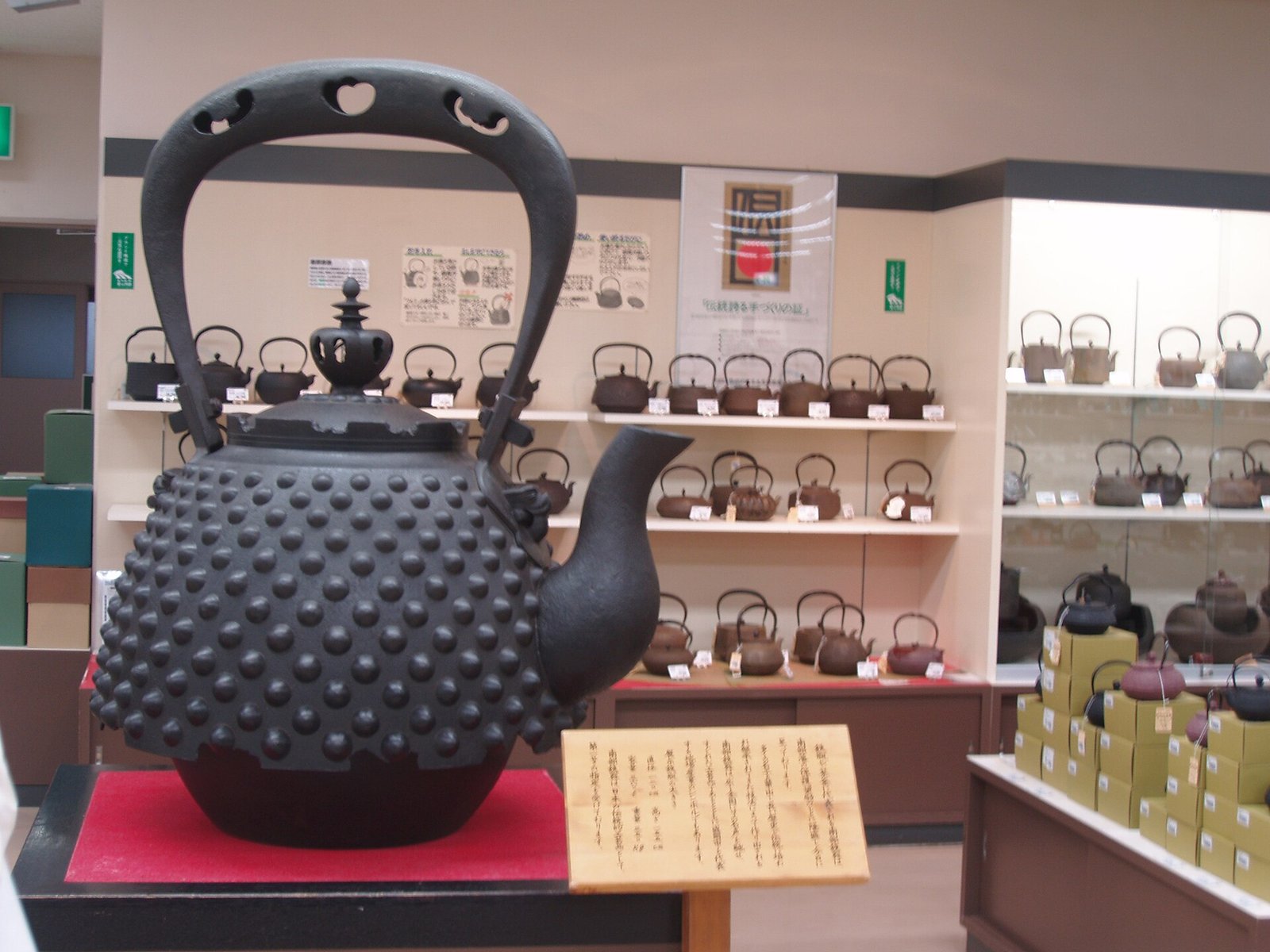
Kintsugi is not the only Japanese craft with care rules of its own. For another example, see our tetsubin care guide, on looking after a Japanese iron kettle so it lasts.
Common misconceptions
“Kintsugi means gold glue.” Not in the traditional method. “Gold itself has no adhesive power to join broken pieces. What is used as the adhesive is lacquer,” as the Junkan to Kurashi article puts it. The gold is the finish on top.
“If the gold is real, the repair is food safe.” The metal powder is only the surface. What matters for food use is what is underneath: the adhesive, the filler and the coating. A real-gold finish over synthetic resin is still a synthetic repair.
“Genuine urushi is guaranteed safe the moment it looks dry.” The workshops’ food-use statements depend on the lacquer being fully cured, which takes time. Tsugu Tsugu’s English-language page asks customers to wait about a month after it finishes a repair before using the piece every day, and its repair terms note that repaired pieces contain ingredients not tested under the food safety act.
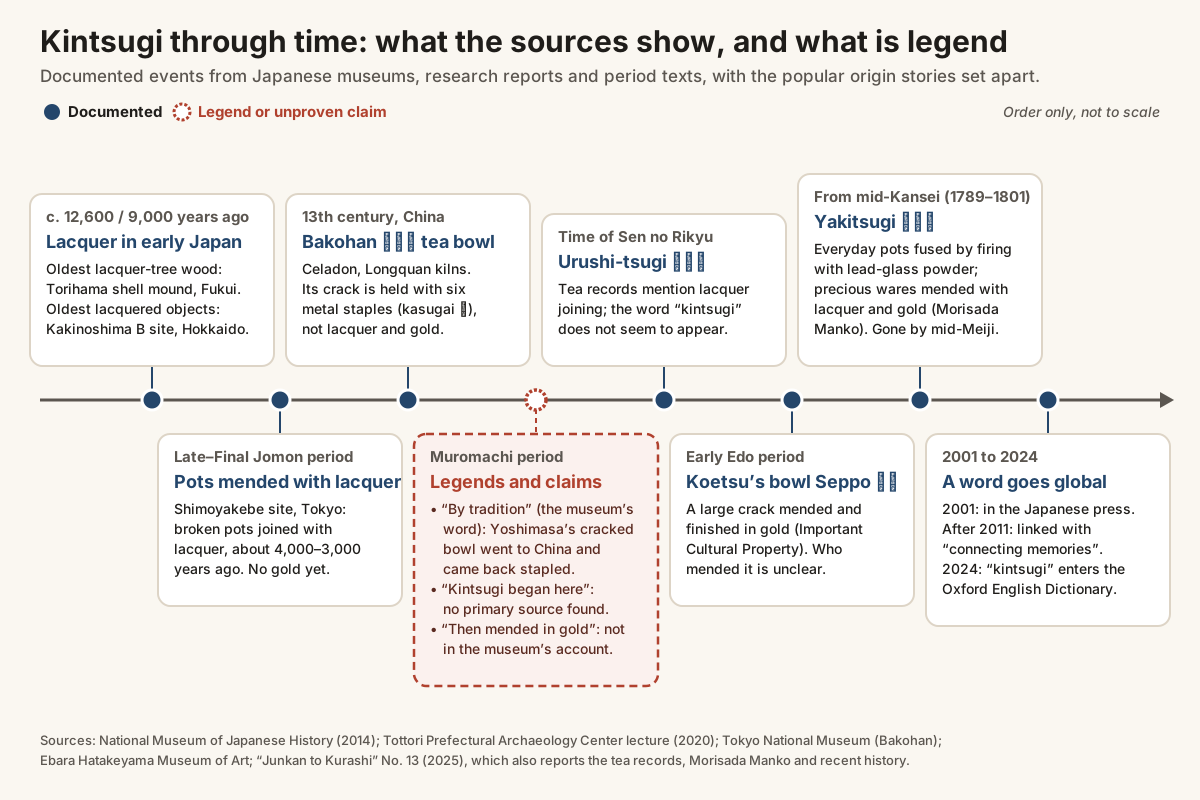
“Kintsugi is an officially designated Traditional Craft of Japan.” It is not. Japan’s government keeps a list of designated Traditional Crafts (伝統的工芸品). As of 27 October 2025 there were 244 of them, and none is kintsugi. Kintsugi is a repair technique. For where it came from and which origin stories hold up, see our history of kintsugi.
Summary
- Hatoya sorts kintsugi into three kinds: all genuine urushi, a hybrid with a synthetic adhesive and urushi coating, and simple kintsugi made entirely of synthetic materials.
- The Japanese makers of synthetic “urushi” paints, Toho Sangyo and Sakurai, say in their product descriptions not to use them on tableware or anything that goes in the mouth. Tsugu Tsugu says its epoxy workshop is not for food-use tableware.
- Workshops that use genuine urushi say repaired pieces can be used as tableware once fully cured, which takes time: about three months for Tsutsumi’s repair service. Tsugu Tsugu’s repair terms also note that its repaired pieces contain ingredients not tested under the food safety act.
- Before buying a kit, check the adhesive, coating, metal powder and the maker’s statement on food use. A kit that does not say is best treated as decorative.
- Raw urushi can cause a rash, so wear gloves and follow your kit’s instructions.
- Tsutsumi says kintsugi tableware cannot go in the microwave or dishwasher, and does not recommend using it over direct flame.
Sources
- https://hatoya-f.com/simple-kintsugi/kintsugi-variation/
- https://hatoya-f.com/simple-kintsugi/synthetic-resin-urushi/
- https://www.tsutsumi-urushi.com/kintsugi
- https://www.tsutsumi-urushi.com/diy
- https://www.tsutsumi-urushi.com/
- https://urushi.life/collections/diy-kits-and-sets/products/kintsugi-kit
- https://urushi.life/pages/privacy-policy
- https://kintsugi-girl.com/
- https://kintsugi-kit.com/pages/professional-kintsugi-repair-requests
- https://kintsugi-kit.com/pages/kintsugi-workshops-in-tokyo-kyoto
- https://kintsugi-kit.com/collections/kintsugi-kits
- https://kintsugi-kit.com/policies/shipping-policy
- https://jsmcwm.or.jp/journal/files/2025/09/050roberts-taira.pdf
- https://scienceportal.jst.go.jp/stories/20231115_w01/
- https://www.pref.tottori.lg.jp/secure/1326827/0718urusi.pdf
- https://www.pref.shimane.lg.jp/infra/nature/shizen/shimane/sizennkansatu/wasigamine/kiken-syokubutu.html
- https://kyodonewsprwire.jp/release/202308218253
- https://kyodonewsprwire.jp/release/202405130682
- https://kyokai.kougeihin.jp/wp/wp-content/uploads/2025/10/shitei-area_20251027.pdf
_-_Flickr_-_dalbera.png)